

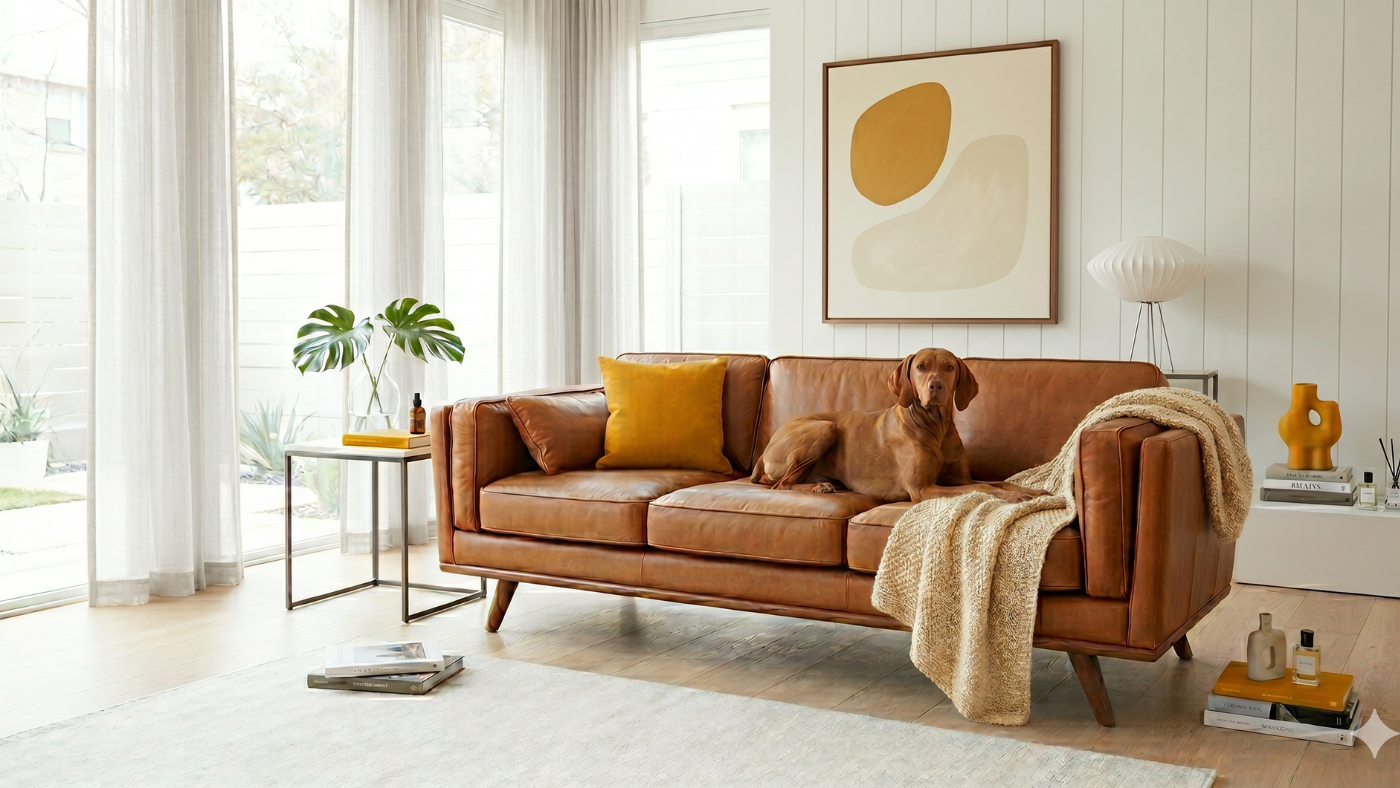
Let's be honest. Dogs are wonderful and chaotic in equal measure. They are loyal to a fault, endlessly entertaining, and — if you've made the deeply human decision to let them on the furniture — occasionally the reason you're Googling "how to get mystery smell out of couch cushions" at midnight.
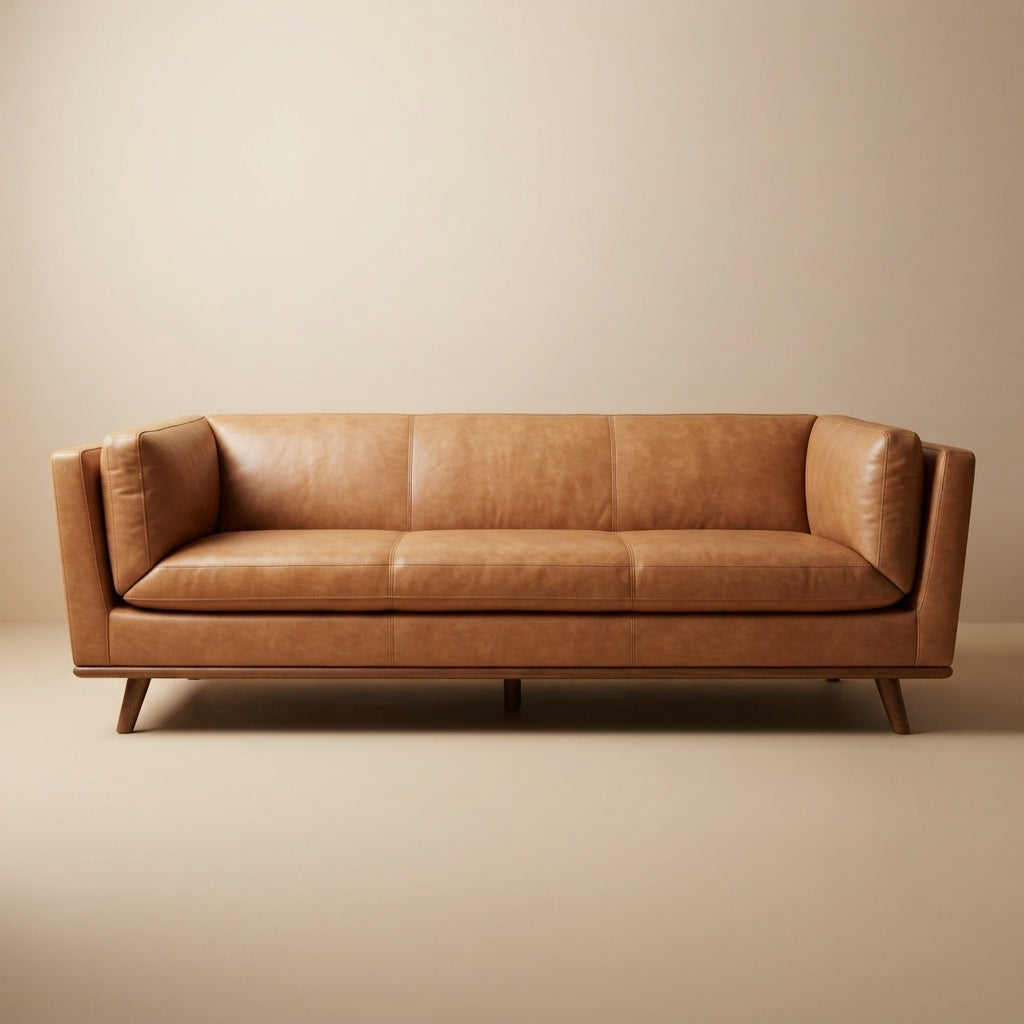
If you share your home with a dog, your leather sofa is not just a sofa. It's a shared living space, a nap zone, a lookout post, and sometimes, unfortunately, a chew toy. The question isn't whether your dog will affect your furniture — they will. The question is how you choose furniture that can actually hold up to the relationship.
At midinmod.com, we've thought a lot about this. And the answer, time and again, is leather.
The Case for Leather in a Dog-Friendly Home
Fabric sofas, for all their softness and variety, are essentially sponges. Pet dander, hair, moisture, and odor work their way deep into the fibers over time, and no amount of vacuuming fully reverses the damage. A study published by the American Kennel Club notes that pet owners with upholstered furniture spend significantly more time on maintenance than those with leather or leather-alternative surfaces — and see diminishing results over the years.
Leather, on the other hand, is a non-porous surface. Spills sit on top of it rather than soaking through. Hair rests on the surface rather than embedding itself into the weave. And perhaps most importantly for anyone who has dealt with a mid-night puppy accident — it cleans up fast.
That said, leather isn't a miracle material. It requires care, some basic habits, and a realistic understanding of what your particular dog is capable of.
Before Your Dog Touches the Couch: Prevention First
The single most cost-effective thing you can do for your leather sofa is invest in prevention before a problem occurs. Here's what that actually looks like in practice.
Keep Those Nails Trimmed
This sounds simple because it is. Long nails are the number one source of unnecessary scratch marks on leather surfaces. Most local groomers offer nail trimming as a standalone service, usually for under $20, and many vet offices include it in routine checkups.
Here's the nuance: not all leather reacts to scratching the same way. Some leather types — particularly full-grain and full-aniline varieties — develop a patina over time that many owners come to love. Light surface marks blend into the natural aging of the leather, giving it character rather than damage. Other leather finishes, especially those with a more polished or protected surface, are more sensitive to visible marks. Knowing what type of leather you have helps you calibrate how worried you need to be.
Most light scratch marks can be buffed out with a soft, clean cloth using gentle circular motions. But again — prevention is easier than correction.
Brush Your Dog Regularly
Dog hair on a leather sofa is manageable. The key word is regularly. Hair doesn't bond to leather the way it does to fabric, but it does accumulate, especially during shedding seasons in spring and fall.
A daily brushing routine — or at minimum a weekly one — dramatically reduces the amount of hair your dog deposits on your furniture. For removal, one of the most effective low-waste methods is a pair of slightly damp rubber kitchen gloves. Run them along the sofa surface and the hair collects in clumps, ready to dispose of. No lint roller required, no specialty products.
The American Veterinary Medical Association recommends regular grooming not only for the cleanliness of your home but for your dog's skin and coat health — so it's genuinely a win-win.

Train Before You Invest
This one is harder for most dog owners to hear, but it matters: if your dog has previously destroyed furniture — chewed a leg, clawed through a cushion, or done something that cannot be described in polite company — please invest in behavioral training before purchasing new furniture.
No material, however durable, is a substitute for a dog who knows the rules. Professional obedience training is widely available, often through local veterinary referrals or certified animal behaviorists. The Association of Professional Dog Trainers (APDT) maintains a directory of certified trainers across the US if you're looking for a starting point.
Set Clear Ground Rules From Day One
For those with the discipline to establish boundaries early: it pays off. Dogs respond to consistency more than almost any other training variable. If "floor is good" is reinforced from the beginning — through treats, positive praise, and a comfortable dog bed nearby — many dogs are content to stay off the furniture entirely.
If you want them on the sofa but want to protect it, designating a specific spot with a washable throw or a waterproof blanket gives your dog a "their" area while giving you an extra layer of protection.
Cleaning Up After Your Dog: What to Do When Accidents Happen
Even the most well-trained dog has an off day. Puppies are especially prone to accidents during the housebreaking phase. Here's how to respond effectively when something goes wrong on your leather sofa.
Urine
Act immediately. The longer urine sits on any surface — leather included — the more likely it is to cause lasting damage and persistent odor. Blot (never rub) the excess moisture with a clean, absorbent cloth. Once the surface moisture is removed, treat the area with a diluted solution of one part white vinegar to three parts water. This helps neutralize the ammonia in urine that causes both the smell and the staining.
Use gentle, circular motions with a soft cloth. Do not scrub. Leather is durable, but aggressive scrubbing can break down the surface finish over time.
If the accident was significant or if you're noticing the odor returning after cleaning, contact a professional leather cleaner. This is not an overreaction — urine-marking is a behavioral issue that can be reinforced if the scent lingers, and professional-grade enzyme cleaners are more effective than home solutions for deep contamination.
Vomit
While unpleasant, vomit is generally easier to clean from leather than urine. Remove solids carefully with a soft cloth or paper towel, working from the outside of the area inward to avoid spreading. Follow with a mild soap solution (a few drops of dish soap in warm water), blot dry, and allow the area to air out.
The good news about vomit: it's involuntary, and unlike marking behavior, dogs are unlikely to repeat it in the same location.
Conditioning After Cleaning
After any wet cleaning, allow the leather to dry naturally — not with a hair dryer or direct heat source, which can cause cracking. Once dry, apply a quality leather conditioner to restore moisture to the surface. Leather is essentially treated skin, and like skin, it benefits from regular conditioning to stay supple and resist cracking over time.
Choosing the Right Dog for Your Lifestyle (and Your Sofa)
If you're in the market for your first dog — or adding to your pack — your lifestyle matters as much as your furniture choices. Here's a brief guide to matching energy levels and temperaments.
High-Energy Breeds like Australian Shepherds are brilliant, athletic, and demanding of activity. If you run, hike, or bike regularly, this is your dog. They thrive with consistent exercise and purpose, and can be destructive when bored. A durable, high-quality leather sofa paired with serious exercise and mental stimulation is the formula for success.
Small but Spirited dogs like Chihuahuas are ideal for smaller living spaces and busy lifestyles. They love their people deeply, are content with shorter exercise sessions, and — at under six pounds — they're not going to wear your sofa down the way a larger dog might.
Gentle Giants like Great Danes are, counterintuitively, excellent apartment dogs. They are calm, affectionate, and relatively low-energy indoors. Their short coats shed but are easy to manage. They do need physical space to stretch out, so a generously sized sectional sofa is a smart investment.
Famously Social Breeds like Labrador Retrievers are easygoing, family-friendly, and adaptable. Labs tend to bond with everyone in the household and are generally easy to train. Their enthusiasm is their main liability — early training helps channel that energy productively.

The Long View: Leather Ages Beautifully, Fabric Just Ages
Here's the truth that doesn't get said enough in furniture conversations: fabric sofas wear out. Leather sofas wear in. That's not just a marketing phrase — it's a real functional difference.
A well-maintained leather sofa in a dog-friendly home, cleaned regularly, conditioned seasonally, and treated promptly after accidents, can last 15 to 25 years. According to furniture industry data compiled by Statista, the average fabric sofa in an active household is replaced every 7 to 10 years. The math — both financial and environmental — favors leather over time.
Set your expectations realistically. If your dog is going to be on the sofa, your sofa will show some signs of life. That's not a failure. That's a home. The goal is to manage the wear intelligently so that what you end up with is a beautiful, characterful piece of furniture rather than something that simply looks exhausted.
Is leather really better than fabric for dog owners?
For most dog owners, yes. Leather is non-porous, meaning spills and moisture sit on the surface rather than soaking in. It's also significantly easier to clean and doesn't trap pet dander and hair the way fabric does. The upfront cost is higher, but the longevity and ease of maintenance typically make it more economical over time.
Will my dog's nails scratch my leather sofa?
They can, especially if nails are long and the leather has a more polished finish. Regular nail trims are the most effective preventative measure. Light surface scratches on full-grain leather often blend into the natural patina of the material over time and can enhance the aged, lived-in look.
How do I remove dog hair from a leather couch?
The most effective low-cost method is a pair of slightly damp rubber kitchen gloves. Run them along the surface and the hair clumps together for easy removal. A dry microfiber cloth also works well. Avoid rough brushes or abrasive tools that could scuff the surface.
What should I do immediately if my dog has an accident on the sofa?
Blot (don't rub) the excess moisture immediately with an absorbent cloth. Then treat the area with a diluted white vinegar solution (one part vinegar, three parts water) to neutralize odor. For significant accidents, contact a professional leather cleaner. Acting quickly is the most important factor.
Can I use regular household cleaners on leather?
Most standard household cleaners are too harsh for leather and can strip the surface finish or dry out the material. Mild dish soap diluted in warm water is generally safe for spot cleaning. Always follow up with a leather conditioner after any wet cleaning, and test any new product on a hidden area first.
How often should I condition my leather sofa?
Generally, two to four times per year is sufficient for most households. If your sofa gets heavy use or you live in a particularly dry climate, you may want to condition more frequently. Look for a sofa that feels dry or slightly stiff — that's a sign it needs moisture.
My dog has destroyed furniture before. What should I do before getting a new sofa?
Invest in professional behavioral training first. A new sofa won't change a dog's habits. Work with a certified trainer — the Association of Professional Dog Trainers (APDT) is a good resource — to address the root behavior before making a significant furniture purchase.
What type of leather is most durable for homes with pets?
Full-grain leather is generally considered the most durable option, as it retains the full strength of the original hide. Thicker leathers offer better puncture resistance. The specific finish also matters — protected or semi-aniline leathers are more resistant to surface staining, while full-aniline leathers age more naturally and develop a patina that can actually make minor wear look intentional.










Leave a comment
This site is protected by hCaptcha and the hCaptcha Privacy Policy and Terms of Service apply.