

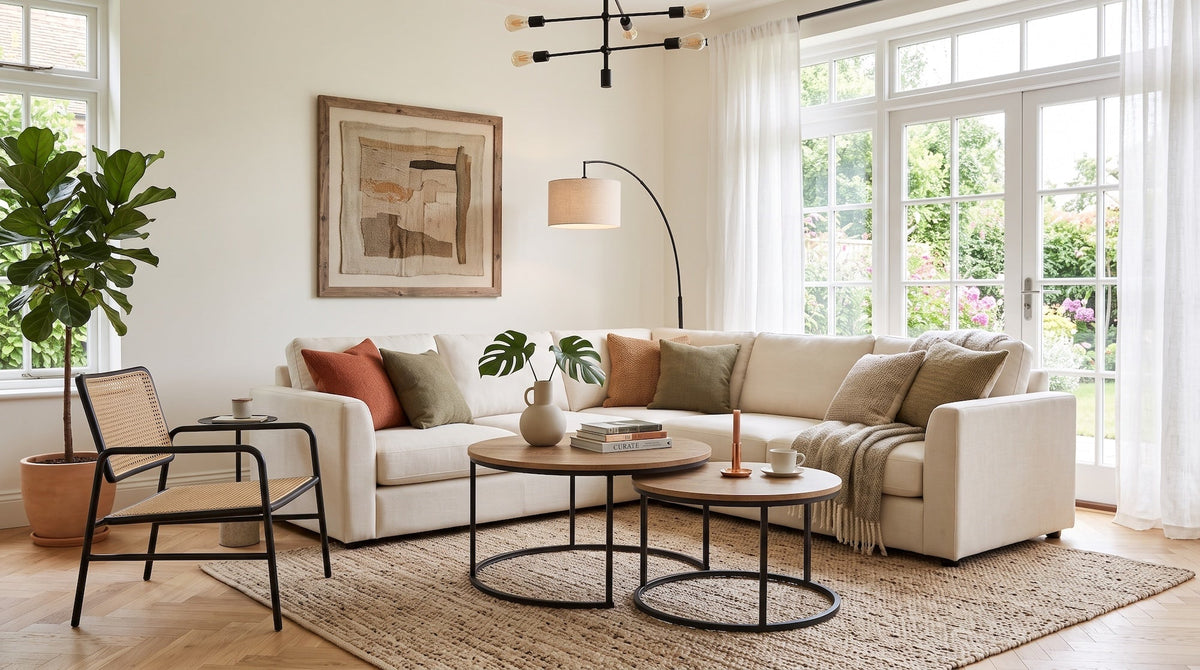
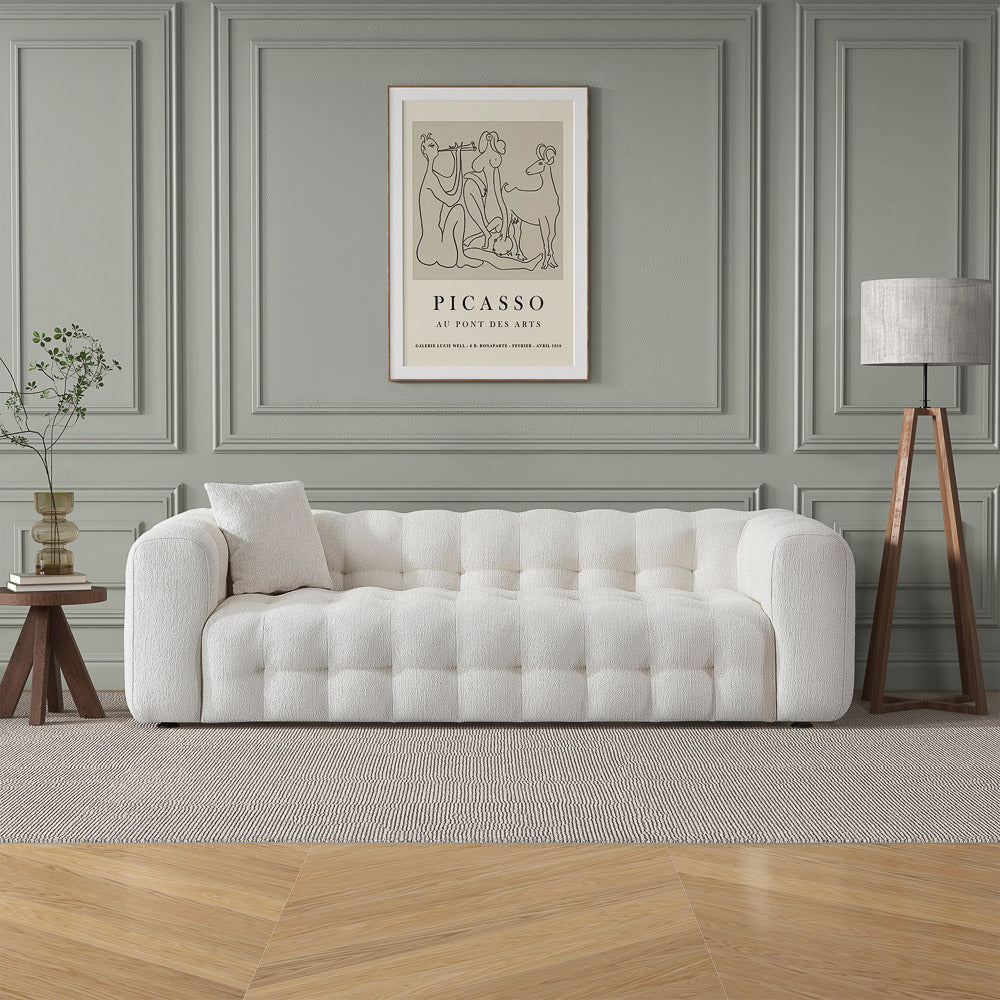
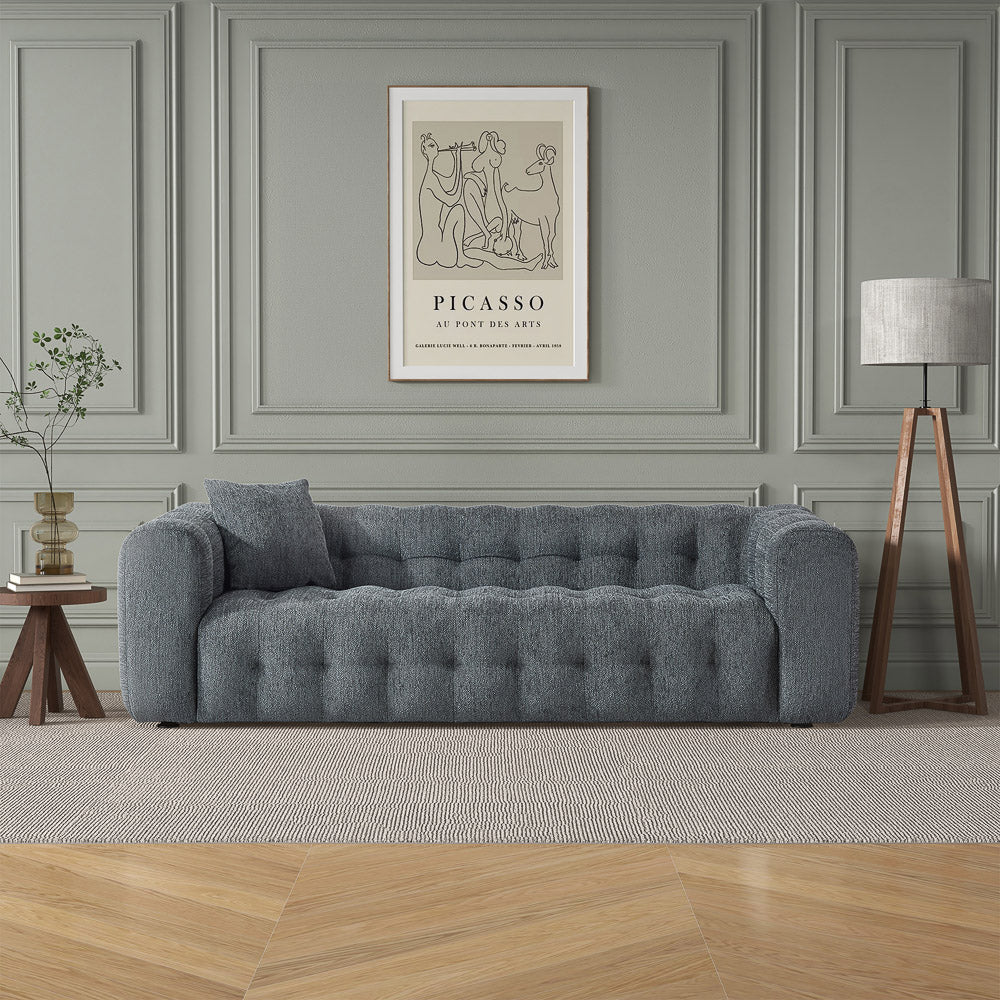
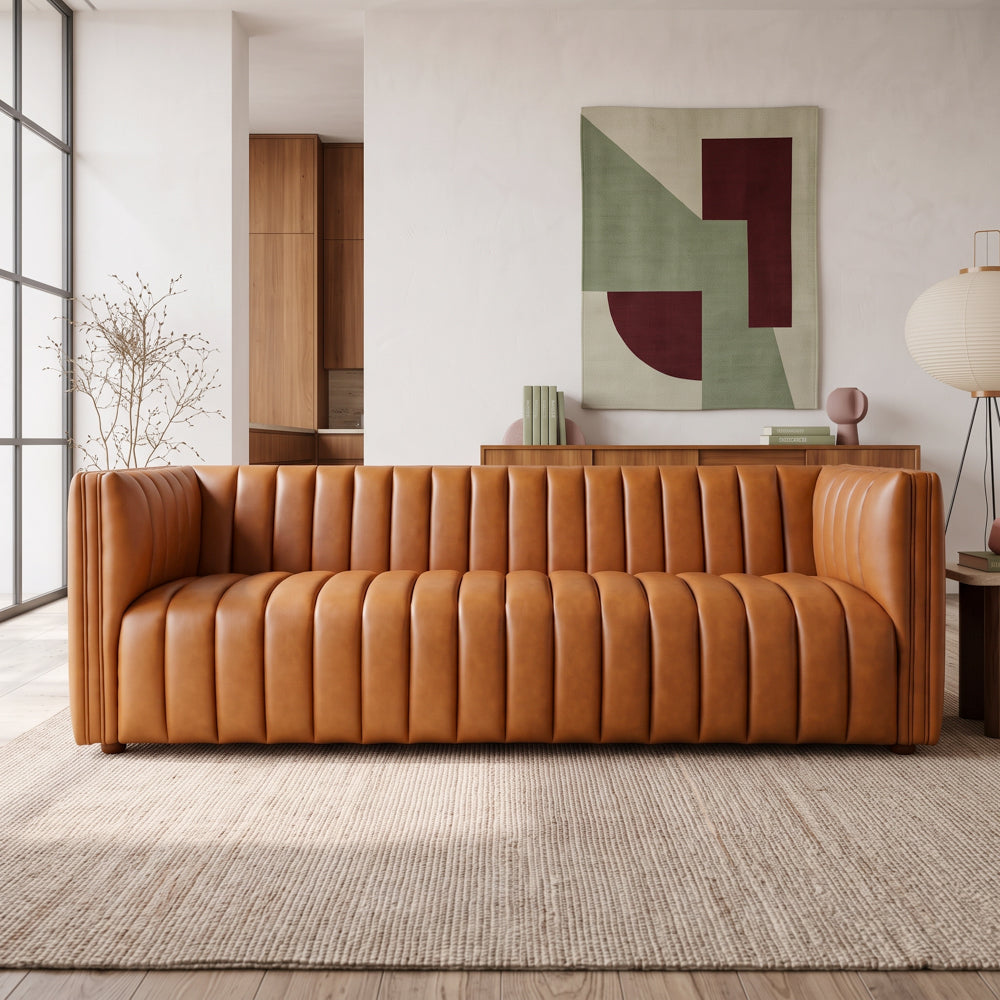
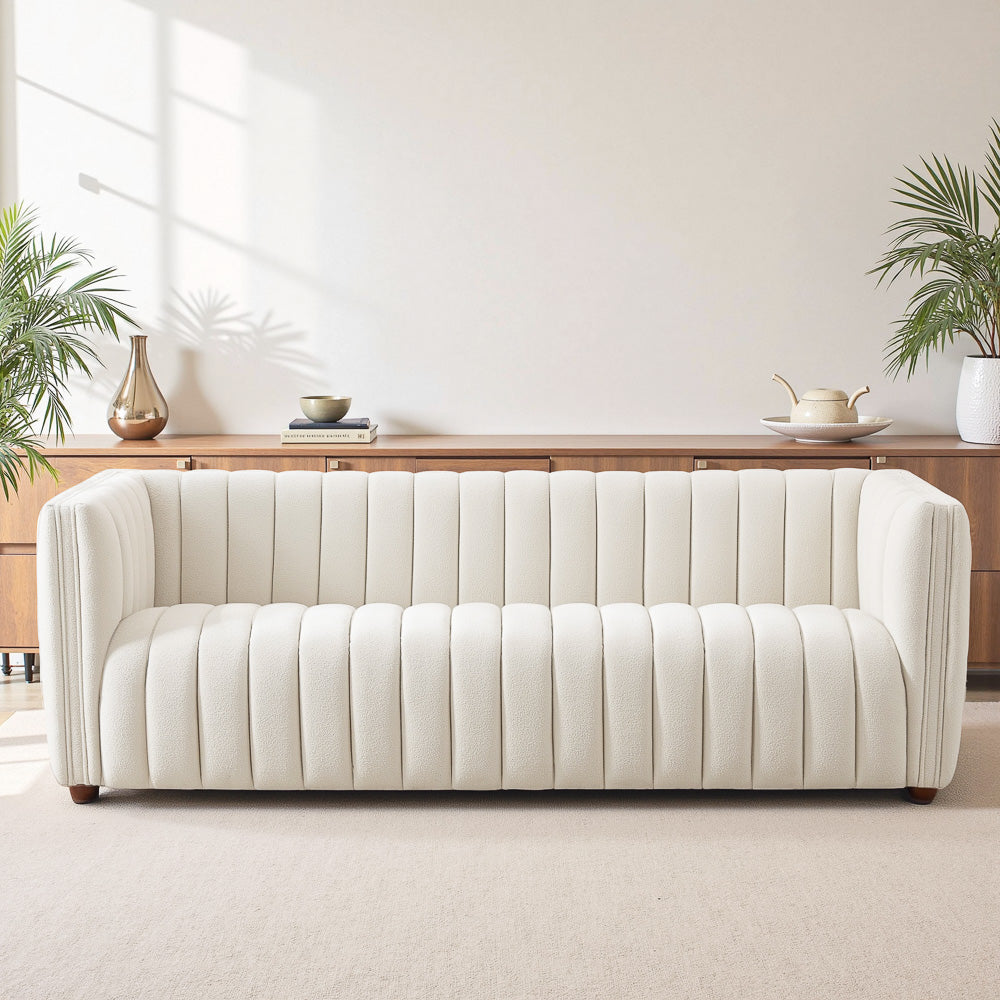
If you only have two minutes, here's the short version. A great mid-century modern coffee table comes down to five decisions: size, height, shape, material, and leg style. Measure your sofa first — your table should be roughly two-thirds its length and sit within an inch or two of your seat height.
Then pick a shape that fits how you actually live (round if kids run laps around your living room, rectangular if you host). Choose walnut or teak for that warm, authentic mid-century look, or glass and marble if your room needs to feel lighter. Finally, check the legs — tapered, splayed, or hairpin legs are what make a table read as genuinely mid-century rather than generic.
Get those five right and the table will still look good in ten years. Get the height wrong, and you'll notice it every single evening.

Why the Coffee Table Is the Hardest Piece to Get Right
Sofas are forgiving. Rugs are forgiving. Coffee tables are not.
A coffee table sits dead center in your living room, at eye level when you're seated, and you interact with it constantly — feet up, coffee down, remote somewhere on top of a magazine. It's the piece you touch most, and the piece guests notice first.
When the proportions are off, the whole room feels slightly wrong even if you can't articulate why.
Mid-century modern design raises the stakes a little further, because the style is built on proportion. Designers like George Nakashima, Finn Juhl, and Isamu Noguchi weren't decorating — they were solving problems with as little material as possible.
Thin profiles. Legs that taper because they don't need to be thick. Surfaces that float. That restraint is exactly what makes a mid-century coffee table look elegant, and it's also why a poorly proportioned one looks so obviously off.
The good news: the rules are simple, and once you know them, shopping gets much faster.
Step 1: Get the Measurements Right Before You Fall in Love
This is the step people skip, and it's the one that causes returns. Grab a tape measure before you browse anything.
Height
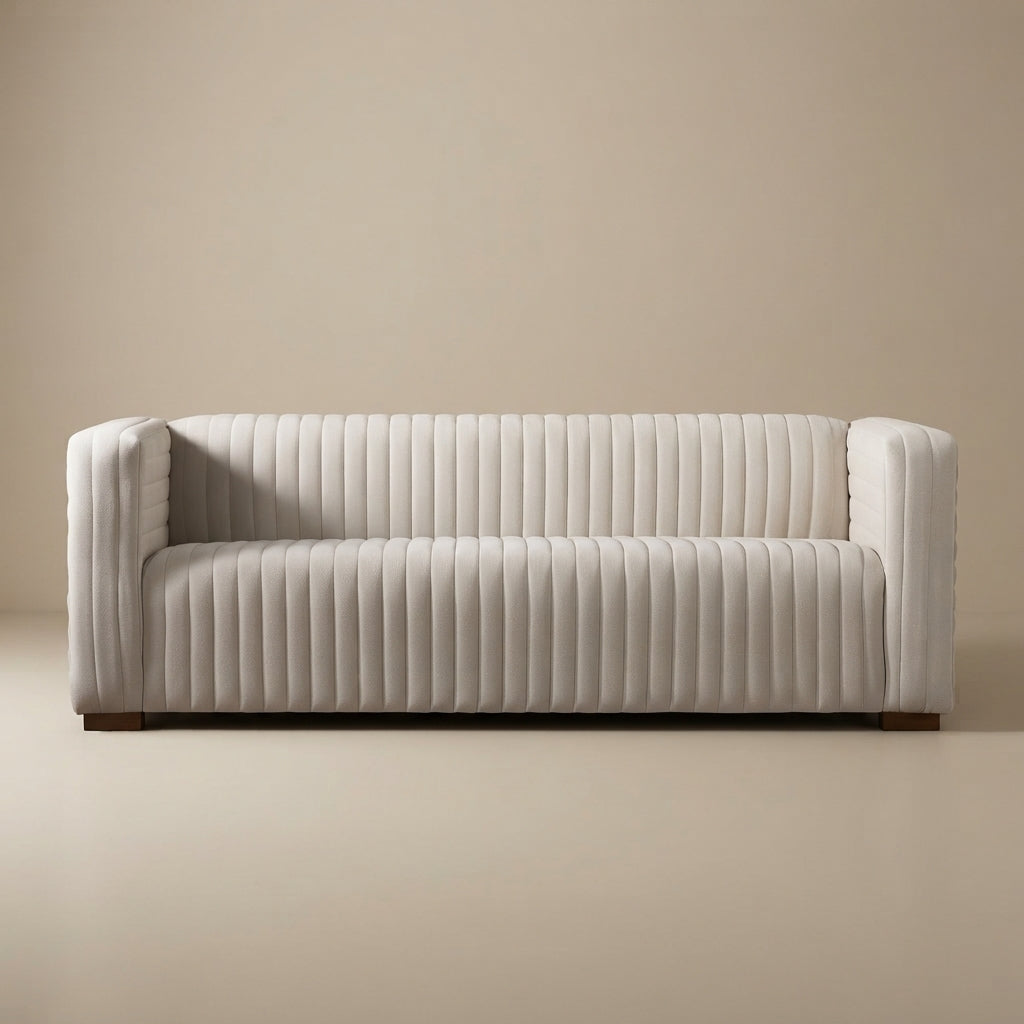
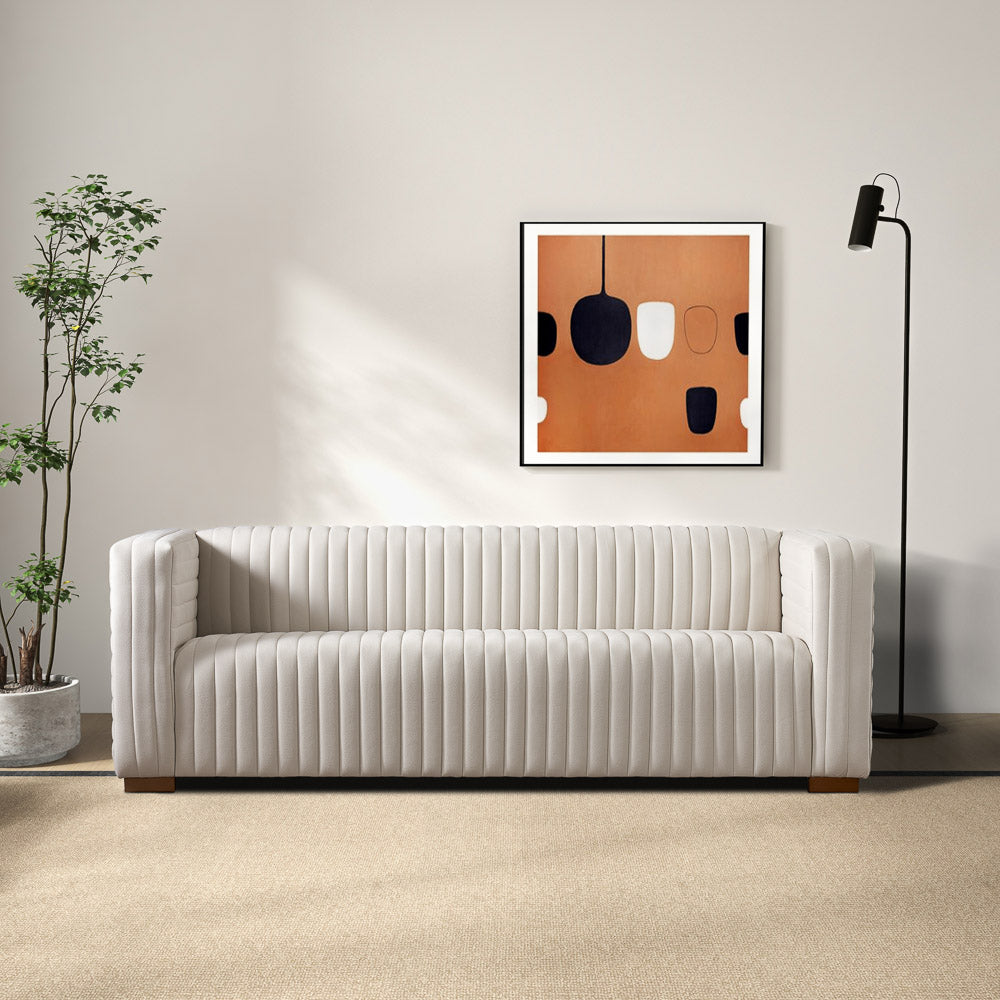
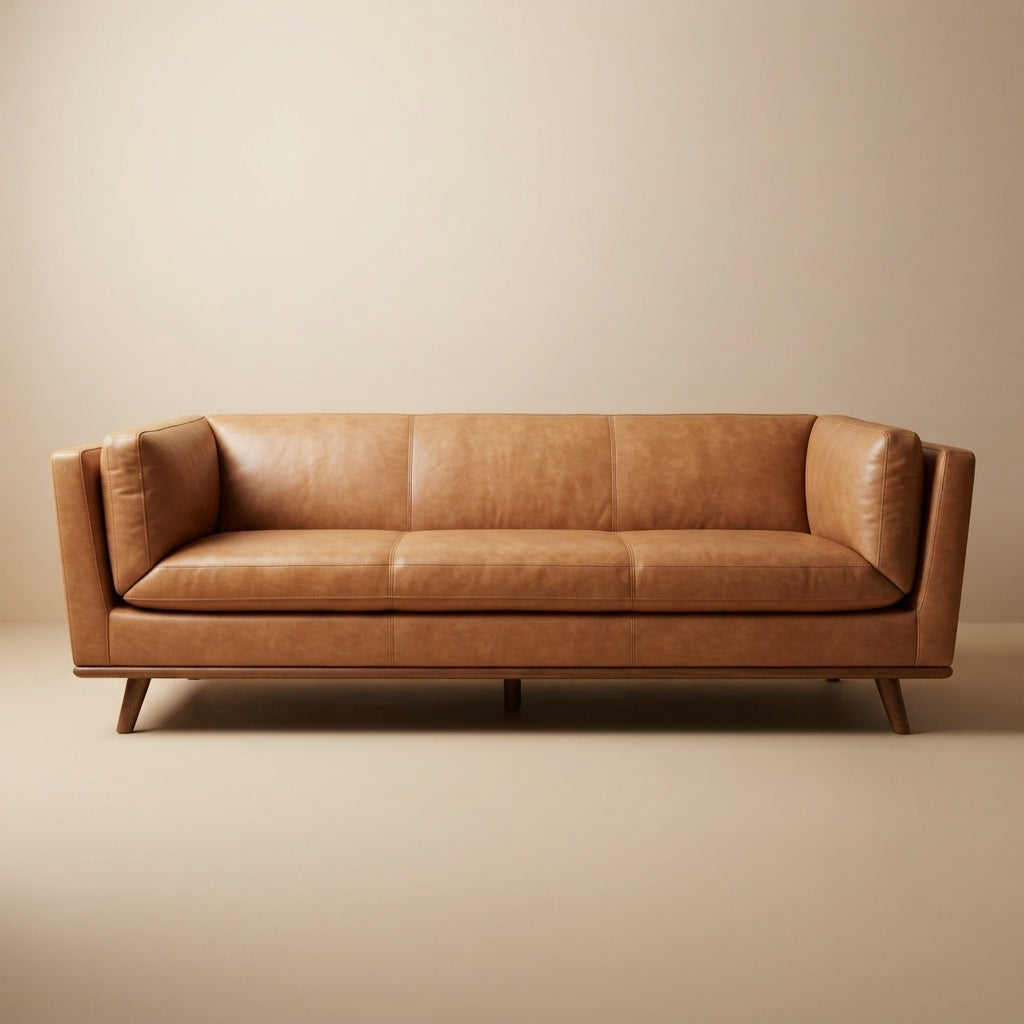
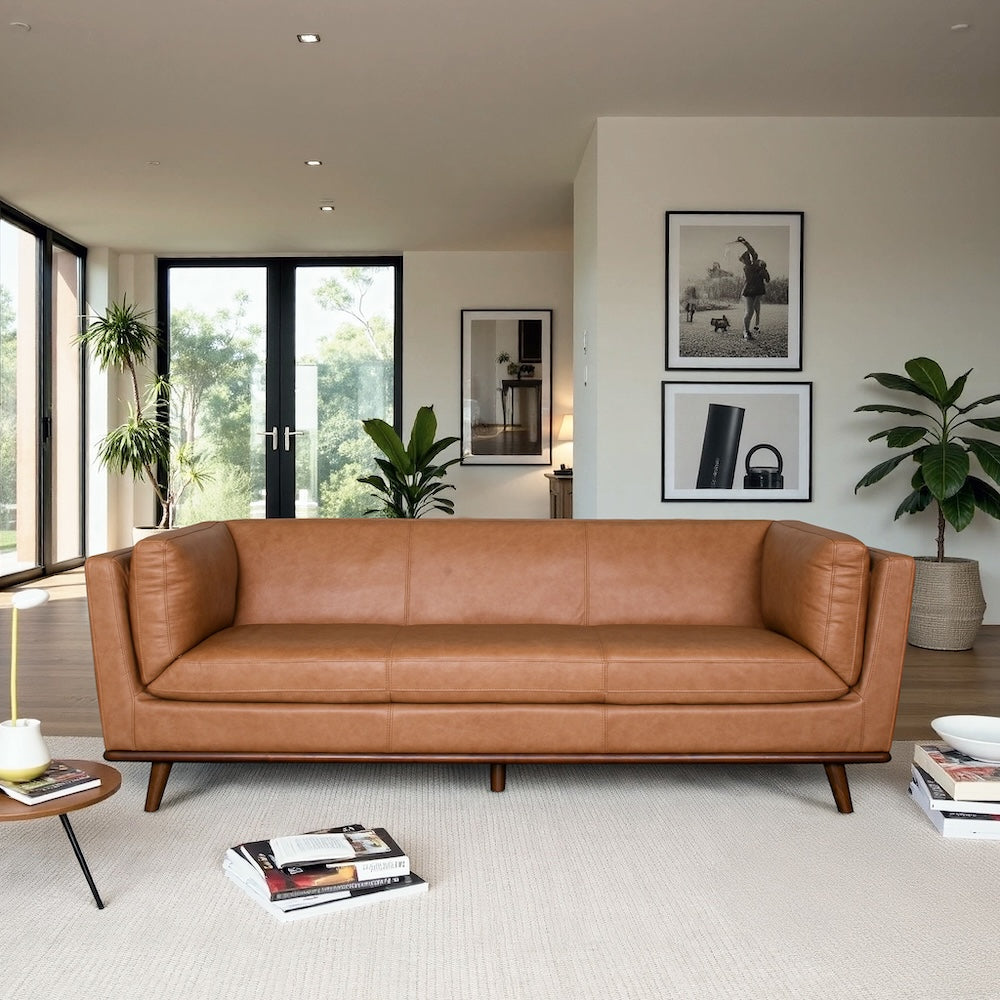
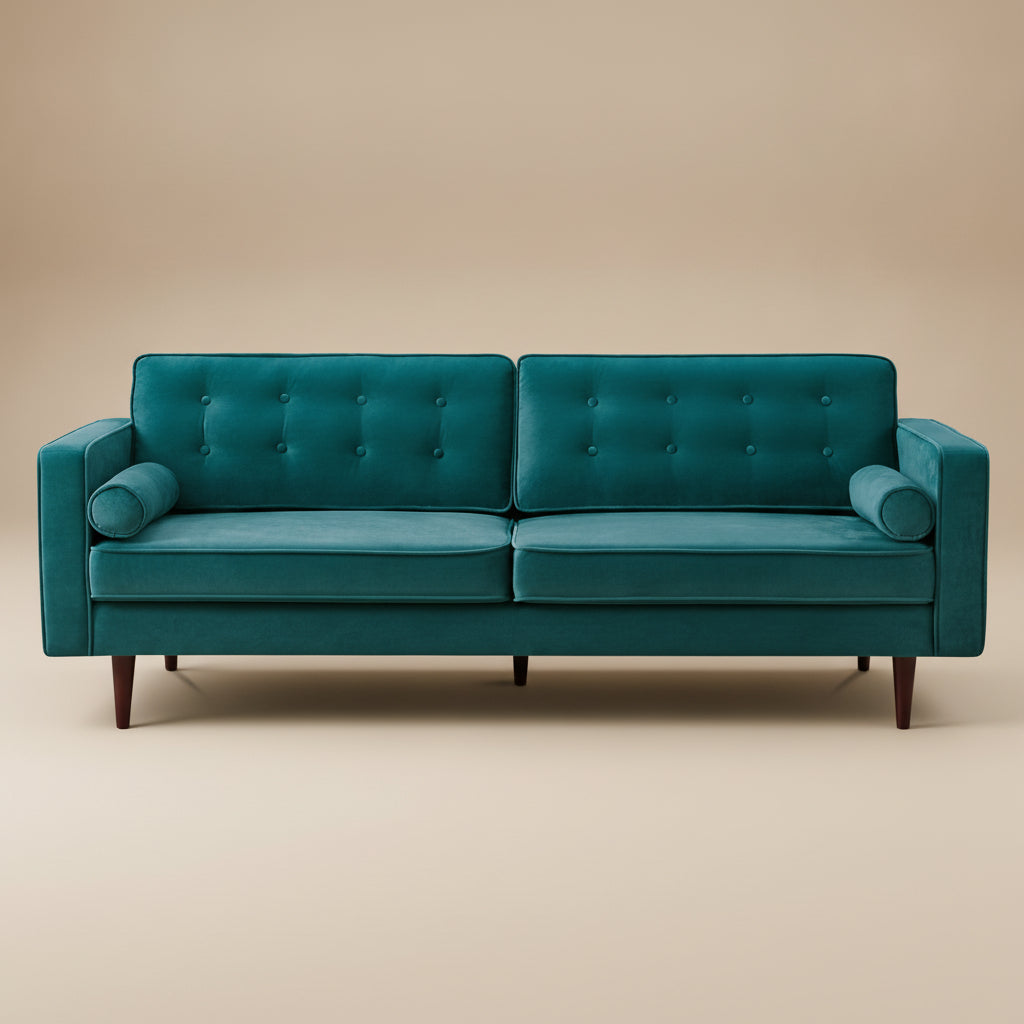
Your coffee table should sit within one to two inches of your sofa's seat height, either at the same level or slightly below. Most sofa seats land between 17 and 19 inches, which is why most mid-century coffee tables are built at 15 to 18 inches tall.
A table that's too low makes you lean and reach. A table that's too tall visually blocks your sofa and kills the low, horizontal feeling that defines mid-century interiors.
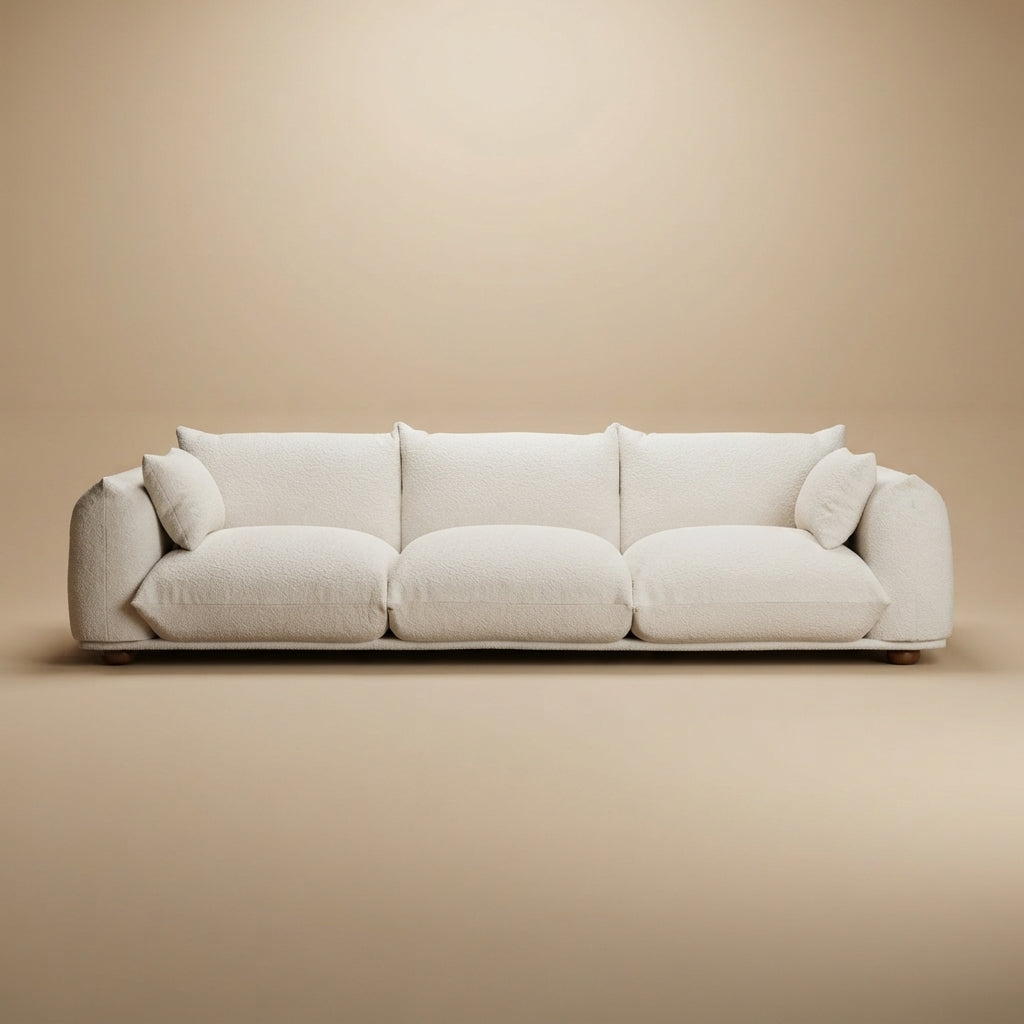
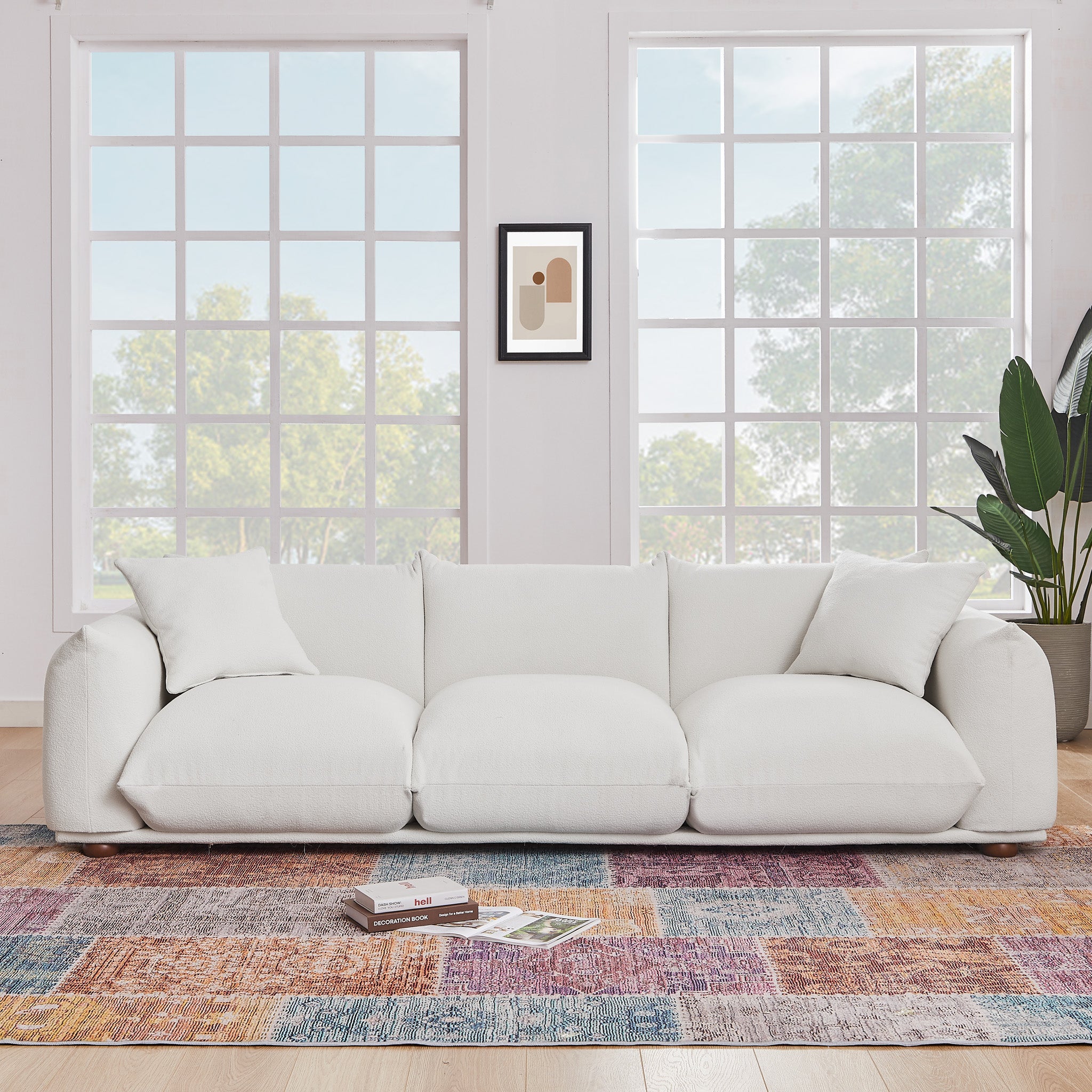
If your sofa is a low-slung Danish design with a 15-inch seat, hunt for a table in the 14- to 16-inch range. Vintage pieces from the 1950s and 60s often run lower than modern furniture, which is worth knowing before you buy.
Length
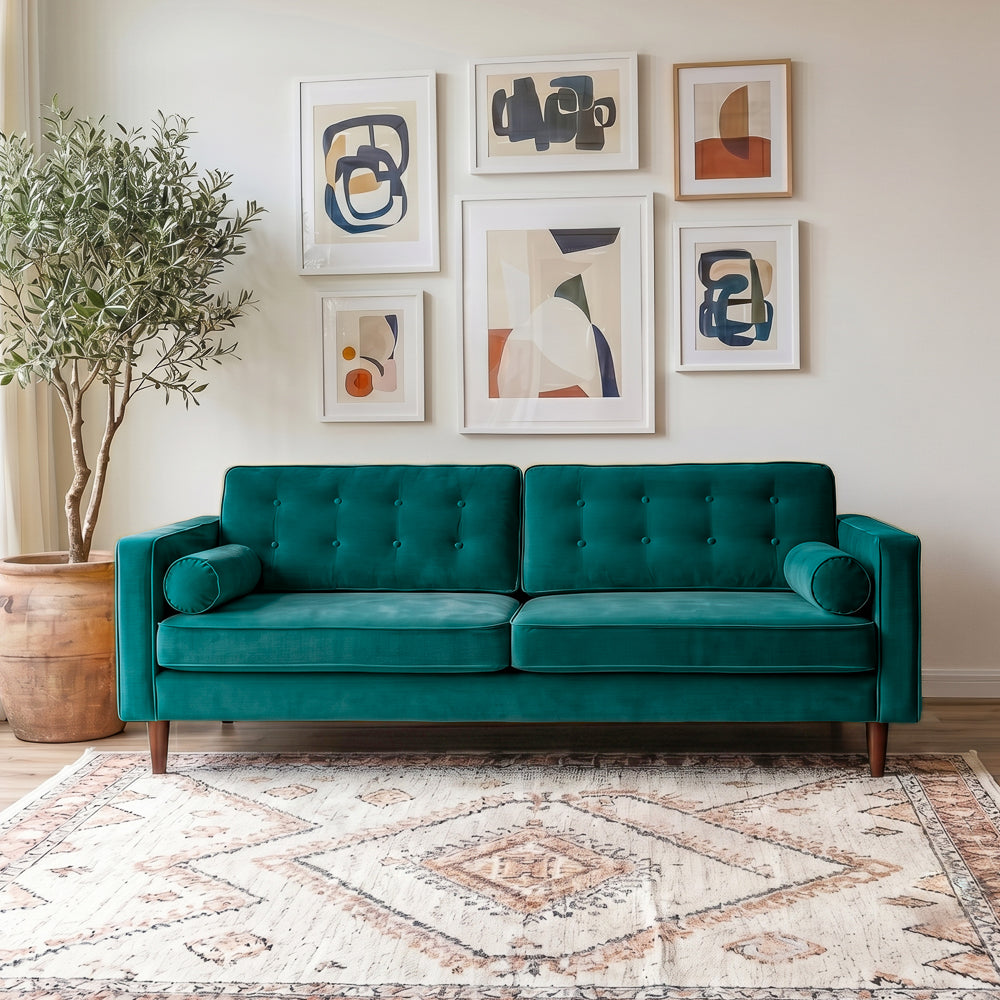
Aim for two-thirds the length of your sofa. An 84-inch sofa pairs beautifully with a table around 50 to 56 inches. Much shorter and the table looks like it wandered in from another room. Much longer and it crowds everything.
If you have a sectional, measure the longest side and apply the same ratio.
Width and Clearance
Leave 14 to 18 inches between the sofa edge and the table — enough legroom to slide past comfortably, close enough that you can reach your mug without standing up.
For walkways around the rest of the table, 30 inches is comfortable, and 18 inches is the practical minimum.
Rectangular mid-century tables usually run 18 to 24 inches deep, which suits most rooms. In a narrow apartment, a 16- to 18-inch-deep table or a round table will open the space up noticeably.
Quick Sizing Reference
| Your Sofa Length | Ideal Table Length | Ideal Table Height |
|---|---|---|
| 60–72 in (loveseat) | 36–46 in | 14–17 in |
| 72–84 in (standard) | 46–54 in | 15–18 in |
| 84–96 in (large) | 54–62 in | 16–18 in |
| Sectional | ⅔ of longest side, or a round table 36–44 in | 15–18 in |
Step 2: Choose a Shape That Matches How You Live
Shape is where personality enters, but it's also a practical decision.
Rectangular is the workhorse. It mirrors the lines of a sofa, seats the most stuff, and anchors a room cleanly. If you entertain, host game nights, or eat dinner in front of the TV more often than you'd admit, rectangular wins.
Oval and surfboard shapes are the most distinctly mid century of the bunch. That soft, elongated silhouette — think Noguchi's rudder table or a classic Danish surfboard top — gives you the surface area of a rectangle with none of the sharp corners. Excellent in tight rooms where you're constantly squeezing past.
Round works hardest in small spaces and conversation-focused layouts. Nothing to bump a hip on, easy to walk around, and naturally social because everyone is equidistant from the snacks. If you have toddlers, round is the answer.
Kidney and boomerang shapes are pure atomic-age fun. They're statement pieces. Beautiful in a room that's otherwise restrained, potentially chaotic in a room that's already busy.
Nesting tables deserve more credit than they get. Two- or three-tiered tables that tuck together give you flexibility — pull them apart when guests arrive, tuck them away on a Tuesday. Very common in original Danish design, and genuinely practical for apartments.
Step 3: Pick Your Material
Material determines the mood of the piece more than anything else. Here's an honest comparison.
| Material | The Look | Durability | Maintenance | Best For | Typical Price |
|---|---|---|---|---|---|
| Walnut | Rich chocolate brown, straight grain, the signature American mid century wood | Excellent — dense hardwood, ages beautifully | Low. Wipe clean; re-oil once or twice a year if oil-finished | Warm, classic interiors; anyone who wants the definitive MCM look | $$$ |
| Teak | Golden honey tone that deepens with age, subtle grain | Excellent — naturally oily and water-resistant | Low. Occasional teak oil keeps color rich | Danish modern rooms; homes with sunlight and humidity swings | $$$–$$$$ |
| Oak | Lighter, more visible grain, Scandinavian feel | Very good — hard and stable | Low, but light finishes show rings and stains sooner | Bright, airy, Scandi-leaning spaces | $$–$$$ |
| Glass + Metal | Transparent, visually weightless, sculptural base takes center stage | Good — tempered glass is tough but chips at edges | High. Fingerprints and dust are constant | Small rooms that need visual breathing space; showing off a great rug | $$–$$$ |
| Marble or Travertine | Cool, luxurious, unmistakably substantial | Excellent structurally, but porous | Moderate–high. Seal it; wipe spills fast (wine, coffee, citrus stain) | Rooms that need a focal point; adults-only living rooms | $$$$ |
| Rosewood (vintage) | Dramatic, dark, streaky grain — the most collectible look | Excellent | Low, but sunlight fades it | Collectors and statement rooms | $$$$ |
A note on rosewood: Brazilian rosewood is protected under CITES regulations, so genuine vintage pieces come with paperwork requirements when crossing borders. It's gorgeous, but do your homework before buying internationally.
Step 4: Look at the Legs
This is the detail that separates a real mid-century modern coffee table from something merely "mid-century inspired." The base carries the entire aesthetic.
Tapered dowel legs — round, angled slightly outward, narrowing toward the floor. The most recognizable mid-century leg. They lift the table and create shadow underneath, which is what makes the top appear to float.
Splayed legs — angled outward more aggressively, often square in profile. Energetic, slightly playful, very 1950s.
Hairpin legs — thin bent steel rods, usually two or three prongs. Industrial, minimal, and they nearly disappear visually. Great when you want the tabletop to be the whole story.
Plinth or pedestal bases — a solid block or sculptural stem. Less common in mid-century but appears in later 1960s work. Heavier visually, so give it room.
Sculptural bases — Noguchi-style interlocking wood, or an X-frame. These are the pieces people photograph.
One rule worth remembering: thin legs make a room feel bigger. If your living room is small, a table on tapered or hairpin legs will feel much lighter than one on a solid plinth, even if the dimensions are identical.
Step 5: Decide Between Vintage, Reproduction, and New
There's no wrong answer here, only trade-offs.
Vintage originals carry genuine history, real solid-wood construction, and often better joinery than anything made today.
They also come with dings, sun-faded patches, and veneer that may need restoration. Prices swing wildly based on designer attribution. If you're buying vintage, check the underside — original manufacturer stamps from makers like Lane, Broyhill Brasilia, or Danish Control marks add real value.
Licensed reproductions give you the exact original design, made to current standards, with a warranty. You pay for the license and the quality control. Worth it for iconic pieces you'll keep for decades.
New mid-century-inspired designs are the most practical route for most people. Modern construction, consistent finishes, sizes designed for contemporary rooms, and a fraction of the price.
The key is checking quality: look for solid hardwood or thick veneer over quality substrate, avoid thin veneer over particleboard, and check whether the legs are solid wood or hollow.
How to Spot Quality Quickly
- Weight. Good hardwood tables are heavy. Suspiciously light usually means hollow construction.
- Veneer thickness. Look at the edges. Paper-thin veneer will chip and can't be refinished.
- Joinery. Mortise-and-tenon or dovetailed drawers signal real craftsmanship. Staples and visible glue do not.
- Leg attachment. Legs should be bolted into reinforced blocks, not screwed directly into a thin panel.
- Finish consistency. Grain should flow logically across the surface. Mismatched grain suggests corner-cutting.

Step 6: Add Storage — Or Deliberately Don't
Mid-century designers loved hidden function. Many original coffee tables include a lower shelf, a slim drawer, or a sliding top.
Choose storage if your living room doubles as your everything-room. Remotes, coasters, chargers, and kids' books all need somewhere to disappear to.
Choose open, legs-only if your room is small or your rug is beautiful. Visual airflow underneath makes a space feel considerably larger, and less surface area means less clutter accumulates.
A middle path: a table with a lower shelf rather than closed drawers. You get a place for books and trays without adding visual weight.
Styling Your Mid Century Coffee Table
Once it's home, resist the urge to fill it. Mid-century styling is about restraint and the rule of odd numbers.
Try three elements at different heights: a stack of two or three books, something organic (a low bowl, a small trailing plant, a piece of ceramic), and one sculptural object — a brass candlestick, a vintage ashtray, a small sculpture. Leave at least half the surface clear.
A round tray on a rectangular table is a classic trick — it corrals small items and adds a shape contrast that keeps the vignette from feeling static. And if you have a genuinely beautiful walnut or teak grain, the best styling decision might be almost nothing at all.
A Simple Checklist Before You Buy
- Measured sofa seat height, and the table falls within 2 inches of it
- Table length is roughly two-thirds the sofa length
- At least 14 inches of clearance between sofa and table
- Shape suits your household (round if there are kids, rectangular if you host)
- Material fits your maintenance tolerance
- Leg style reads authentically mid century
- Checked construction quality — weight, veneer, joinery
- Decided whether you need storage
- Confirmed delivery access: doorway width, stairwell turns, elevator size
That last one catches more people than you'd expect.
Final Thoughts
A mid-century modern coffee table is one of the few furniture purchases that genuinely improves a room every single day. Get the height right, respect the two-thirds rule, choose a shape that matches your actual life rather than an imagined one, and pay attention to the legs. Everything after that is personal taste — and that's the fun part.
At MidinMod, we curate mid-century modern furniture that keeps the original proportions and craftsmanship intact while fitting the way people live now. Browse our coffee table collection to find the piece your living room has been missing, or reach out if you'd like help matching a table to your sofa dimensions.
What height should a mid century modern coffee table be?
Between 15 and 18 inches for most rooms. The reliable rule is to stay within one to two inches of your sofa's seat height, at the same level or slightly lower. Low-slung Danish sofas may call for a table as low as 14 inches.
How big should my coffee table be compared to my sofa?
About two-thirds the sofa's length. For an 84-inch sofa, look at tables between 50 and 56 inches long. This ratio keeps the pieces visually balanced without crowding the room.
Is walnut or teak better for a mid century coffee table?
Both are excellent. Walnut is darker and richer, and reads as American mid century — think Nakashima or Danish-influenced US manufacturers. Teak is warmer and golden, more associated with Danish modern, and its natural oils make it slightly more forgiving in humid climates. Choose based on whether your room wants warmth (teak) or depth (walnut).
Can a mid century coffee table work in a room that isn't mid century?
Absolutely, and it's one of the style's real strengths. The clean lines and warm woods bridge traditional, industrial, bohemian, and contemporary spaces. A walnut oval table on tapered legs looks at home in almost any living room. Mid century pieces mix better than they match.
How do I choose a coffee table for a sectional?
Measure the longest side of the sectional and apply the two-thirds rule, or go with a round or oval table 36 to 44 inches across. Round shapes are especially good with L-shaped sectionals because they don't fight the corner geometry.
Are vintage mid century coffee tables worth the price?
It depends on your goals. Vintage pieces offer authentic construction, real solid-wood or thick-veneer builds, and genuine provenance — plus they hold value well. But condition varies, sizes can be smaller than modern rooms expect, and you may need to budget for restoration. New mid century designs give you predictable quality and modern proportions at a lower price.
What shape coffee table is best for a small living room?
Round or oval. No corners to navigate, easier to walk around, and the curved footprint reads as less bulky. Pair it with thin tapered or hairpin legs to maximize the sense of open floor.
How do I care for a wood mid century coffee table?
Dust with a soft dry cloth, wipe spills immediately, and use coasters — water rings on oil-finished wood are the most common damage. For oil-finished walnut or teak, apply a light coat of appropriate furniture oil once or twice a year to keep the color rich. Keep the table out of direct sunlight, which fades wood tones unevenly over time.
Should my coffee table match my other wood furniture?
No, and it's better if it doesn't match exactly. Mid century interiors typically layer two or three wood tones. Aim for tones that relate — all warm or all cool — rather than perfectly identical finishes, which can look flat and showroom-like.



Leave a comment
This site is protected by hCaptcha and the hCaptcha Privacy Policy and Terms of Service apply.