

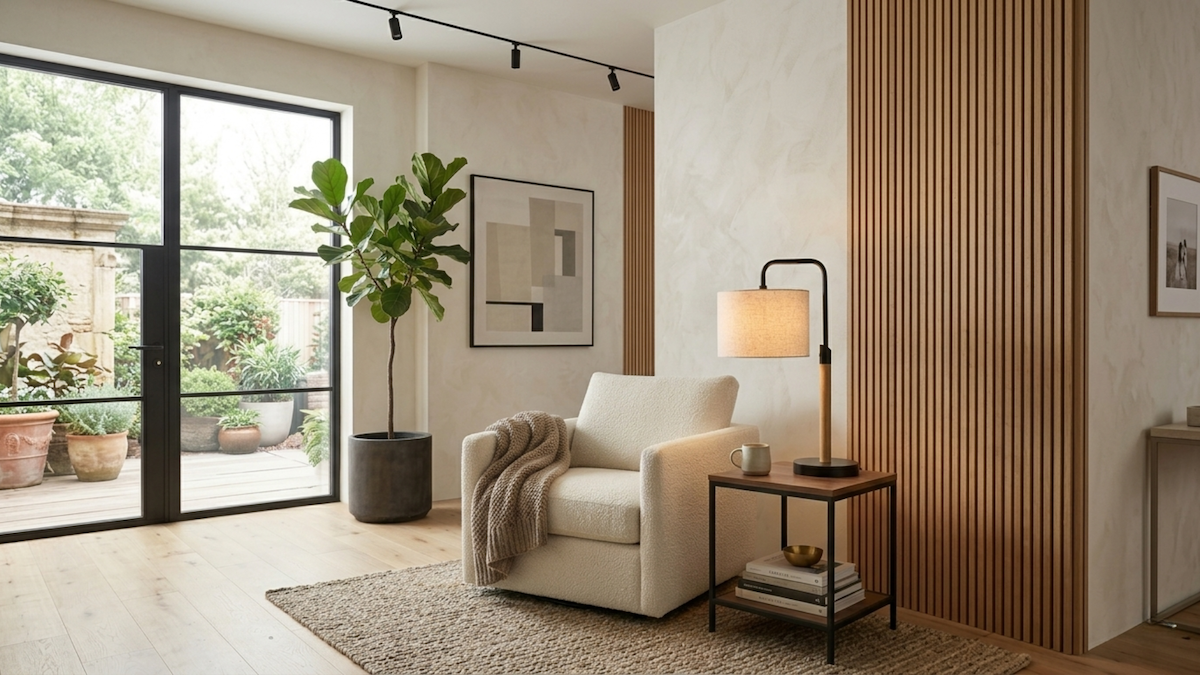
Furniture is one of the most quietly impactful choices you make for your home. The right sofa or dining table can serve a family for decades. The wrong one ends up at the curb in a few years, replaced by something just as disposable. Multiply that cycle across millions of households, and the cost to the planet adds up fast.
The good news is that buying sustainably does not mean spending more, settling for less, or chasing trends. It means understanding a handful of materials and certifications, then choosing pieces that are genuinely built to last. This guide walks you through exactly what to look for, room by room, so you can furnish your home with confidence.
What Is Sustainable Furniture?
Sustainable furniture is furniture made with less impact on the planet. It does not mean giving up on quality or style. It simply means choosing pieces that are built to last, made from safe materials, and sourced responsibly.
A piece of furniture earns the "sustainable" label when it meets at least one of these standards:
- It comes from properly managed forests.
- It uses foam or materials that are free from harmful chemicals.
- It is built well enough that it never needs to be replaced.
- It is made from natural materials that break down safely at the end of their life.
The single most important idea in this entire guide is also the simplest: a piece of furniture that lasts 30 years is far better for the planet than three cheap pieces that each last 10. A solid walnut dining table bought once and kept forever creates a tiny fraction of the waste that comes from repeated buying and throwing away. Longevity is sustainability.
Why Mid-Century Modern Design Is a Smart Sustainable Choice
Mid-century modern furniture first appeared in the 1940s and 1950s. The designers of that era had a clear goal: to make things from honest materials, keep the shapes clean, and build them well enough to last. They were not interested in decoration for its own sake. They wanted furniture that worked.
That philosophy lines up perfectly with what sustainability means today. Here is why mid-century modern pieces tend to be the better environmental choice:
- Solid wood frames — no cheap particle board, no veneers held together with toxic glue.
- Timeless shapes — these designs do not go out of style, so there is no urge to replace them.
- Strong construction — reinforced frames and proper spring systems that hold up for decades.
- Natural materials — walnut, rubberwood, pine, genuine leather, and natural fabrics instead of plastic-based alternatives.
Mid in Mod builds every collection on this same foundation. The materials are chosen to last. The construction is built to hold. And the designs are made to stay relevant long after the purchase.
Key Certifications to Know Before Buying
Labels and certifications can feel confusing. Here is a plain-language breakdown of the four that actually matter.
FSC® (Forest Stewardship Council)
FSC® is the most trusted certification for wood. When a piece of furniture carries this mark, it means the wood came from a forest that is properly managed to protect wildlife, water, and nearby communities. If the frame of a sofa or table is FSC®-certified, that is a strong sign the manufacturer takes sourcing seriously.
CertiPUR-US®
This is the certification to look for on sofa cushions and upholstered seats. Foam without it can off-gas chemicals into your home over time. CertiPUR-US® certified foam is tested by independent labs and contains no ozone-depleting chemicals, no heavy metals, no formaldehyde, and no harmful flame retardants. For homes with children, pets, or anyone sensitive to air quality, this label matters a great deal.

TSCA (Toxic Substances Control Act)
TSCA compliance means a product's materials meet federal limits on chemical content, including formaldehyde in wood panels. In short, TSCA-compliant furniture is safer to live with day-to-day.
CAL TB 117
This is California's safety standard for upholstered furniture, and it covers flammability. Products that meet it have been properly tested and do not rely on chemical flame retardants soaked into the foam, which is better for the air inside your home.
Room-by-Room Sustainable Furniture Guide
Certifications make more sense when you can see them in real pieces. Here is how sustainable choices play out in every room of the house.
Living Room: Finding an Eco-Friendly Sofa
The sofa is usually the largest furniture purchase in any home, making it the biggest opportunity to choose well. A well-made sofa can last 15 to 25 years. A poorly made one may fall apart in five.
What to look for in a sustainable sofa:
- A frame made from FSC®-certified or kiln-dried solid wood
- Cushions certified by CertiPUR-US®
- Genuine leather or natural-fabric upholstery, both of which last longer and do not shed microplastics the way synthetics do
- A sinuous spring system rather than cheap webbing, for long-term support
- Corner-block reinforced joinery that resists twisting and creaking
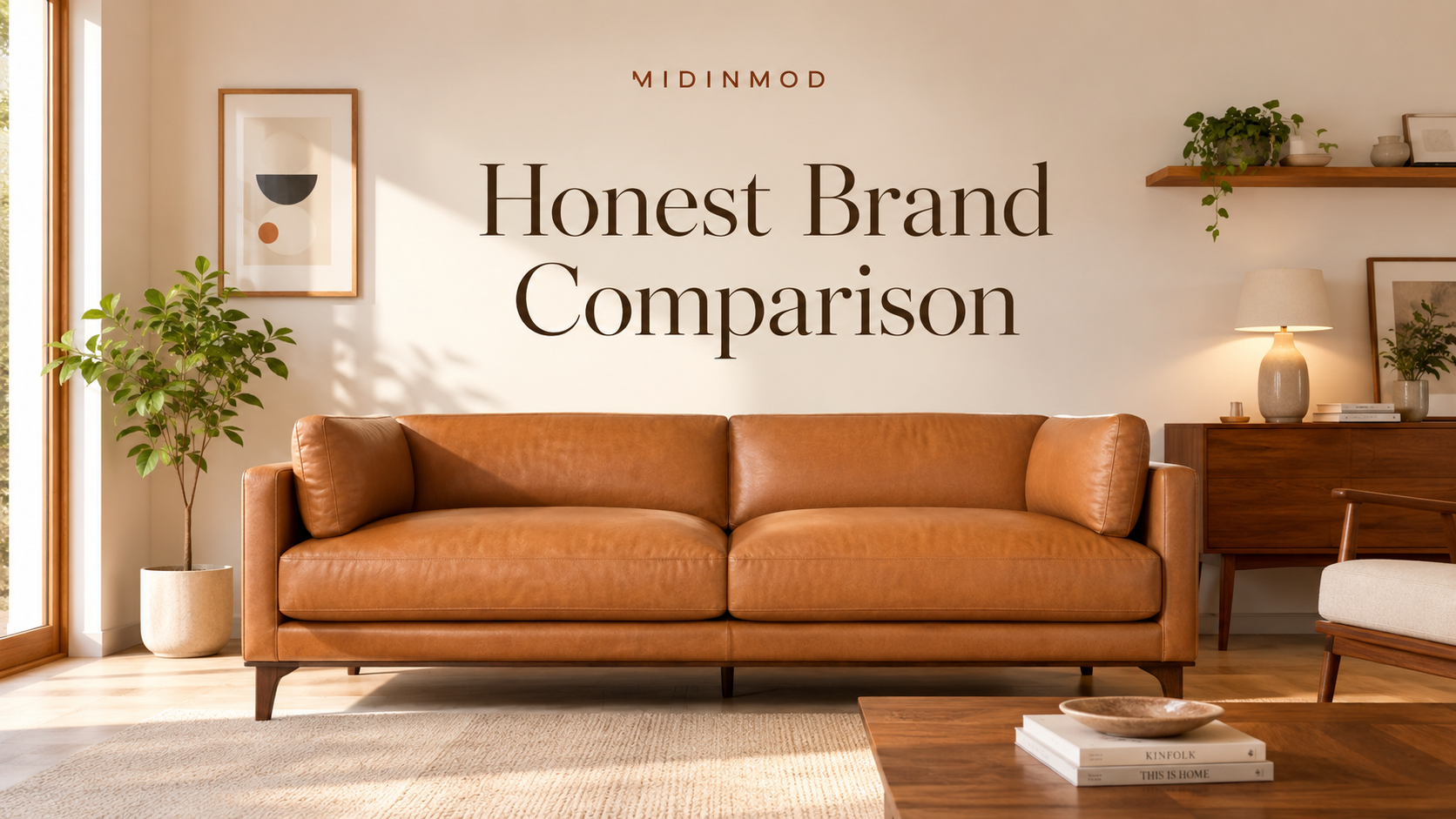
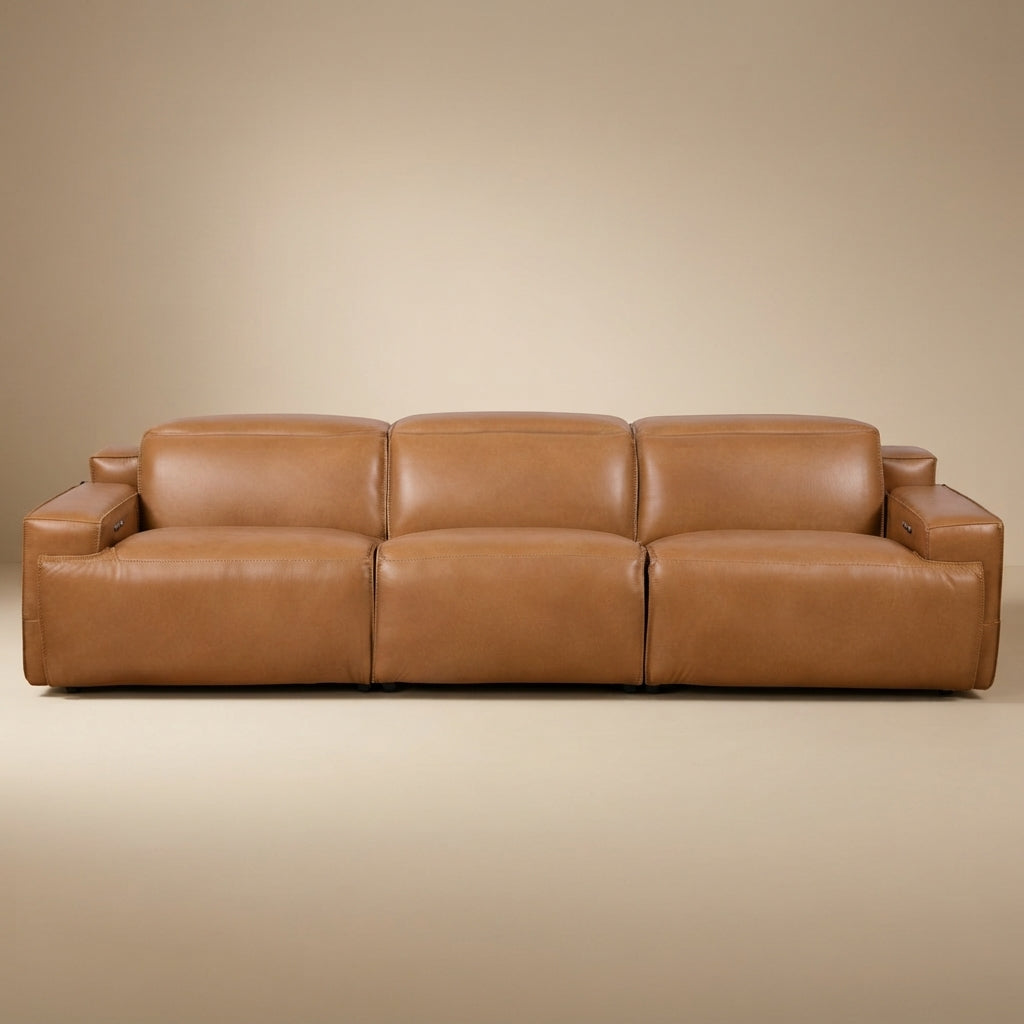
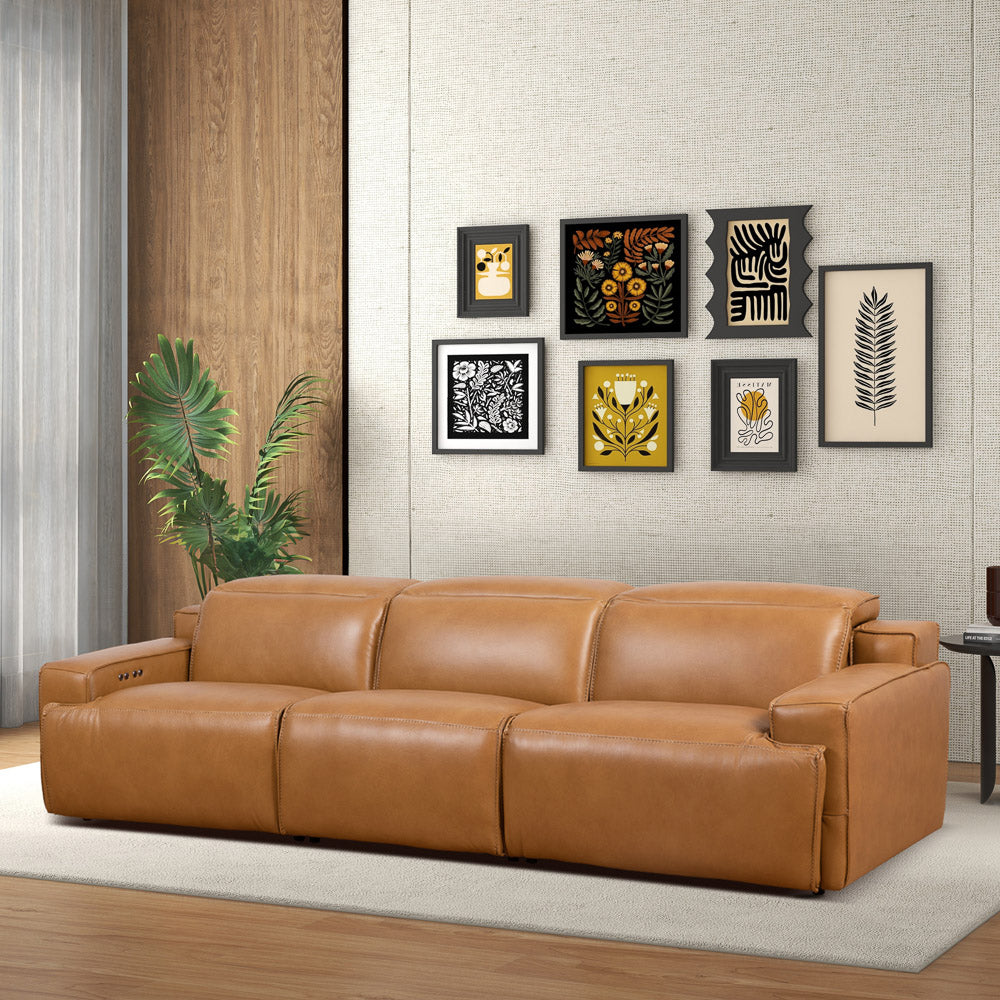
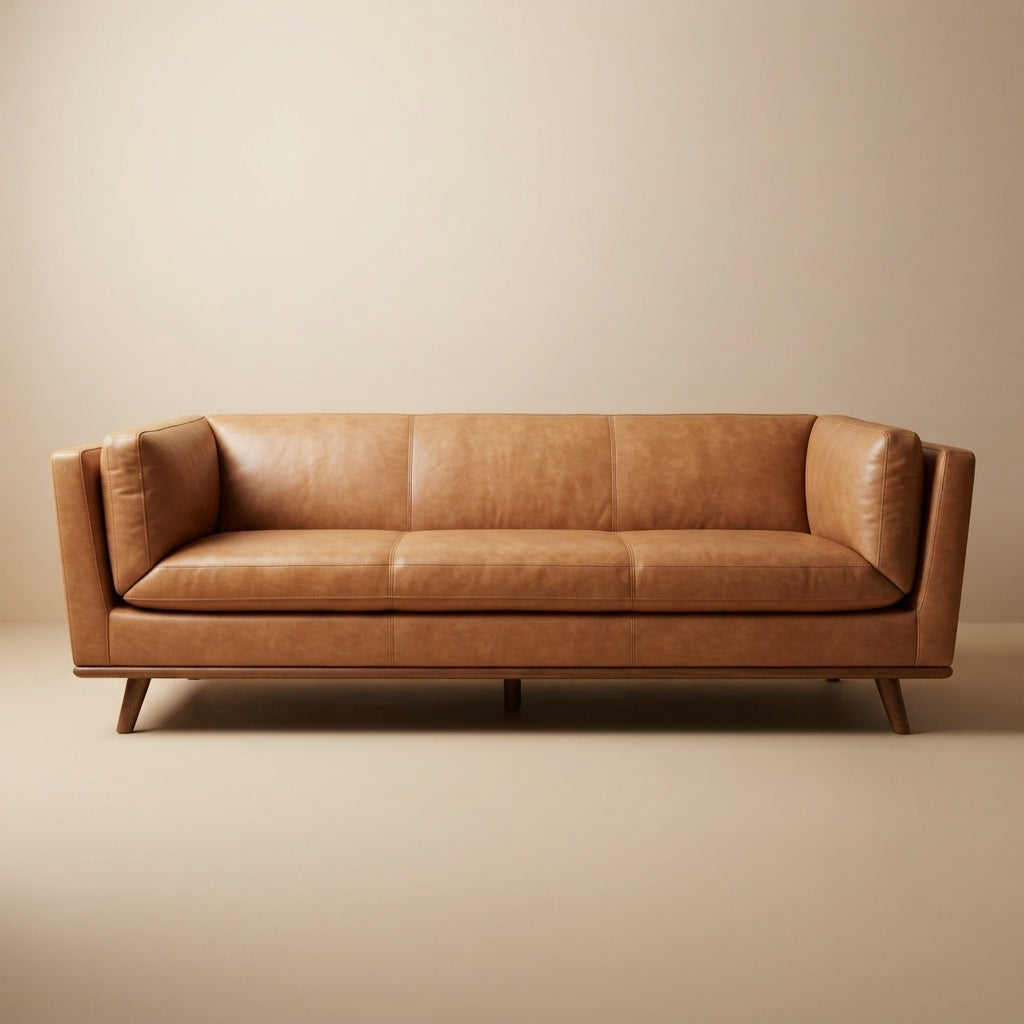
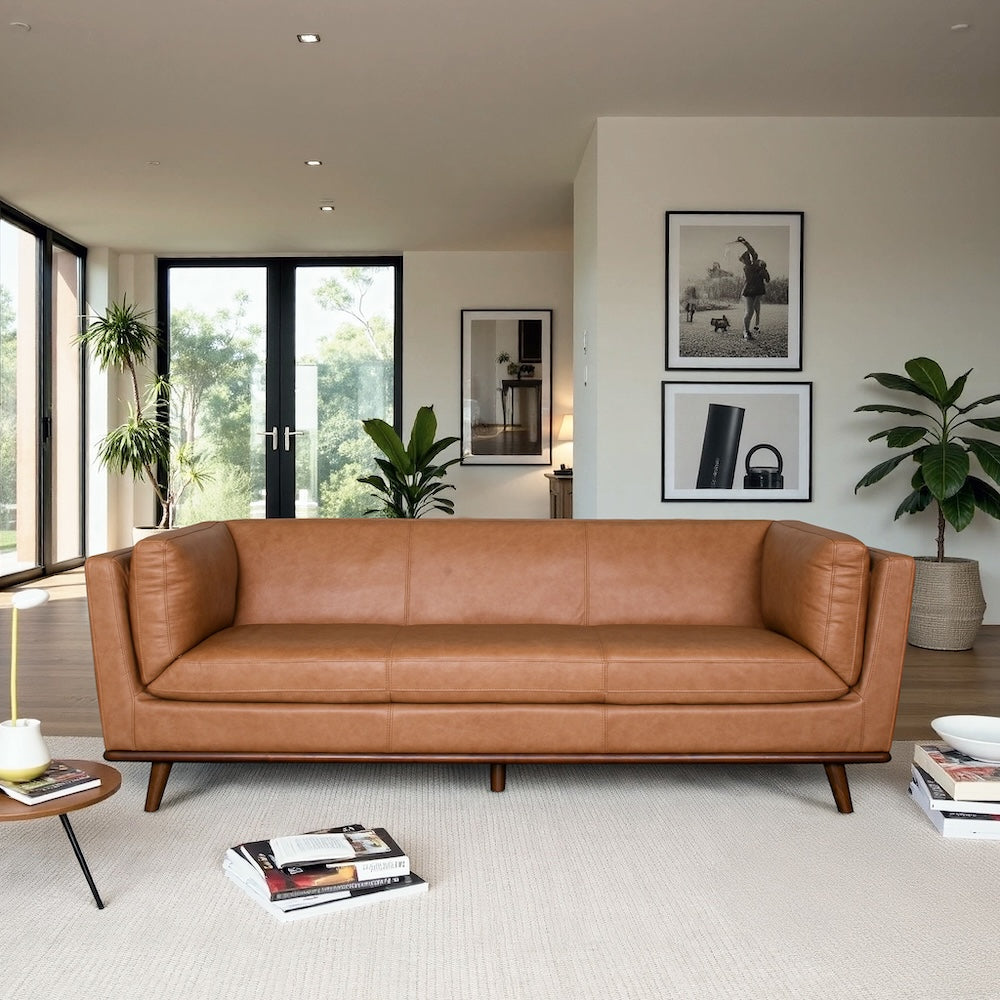
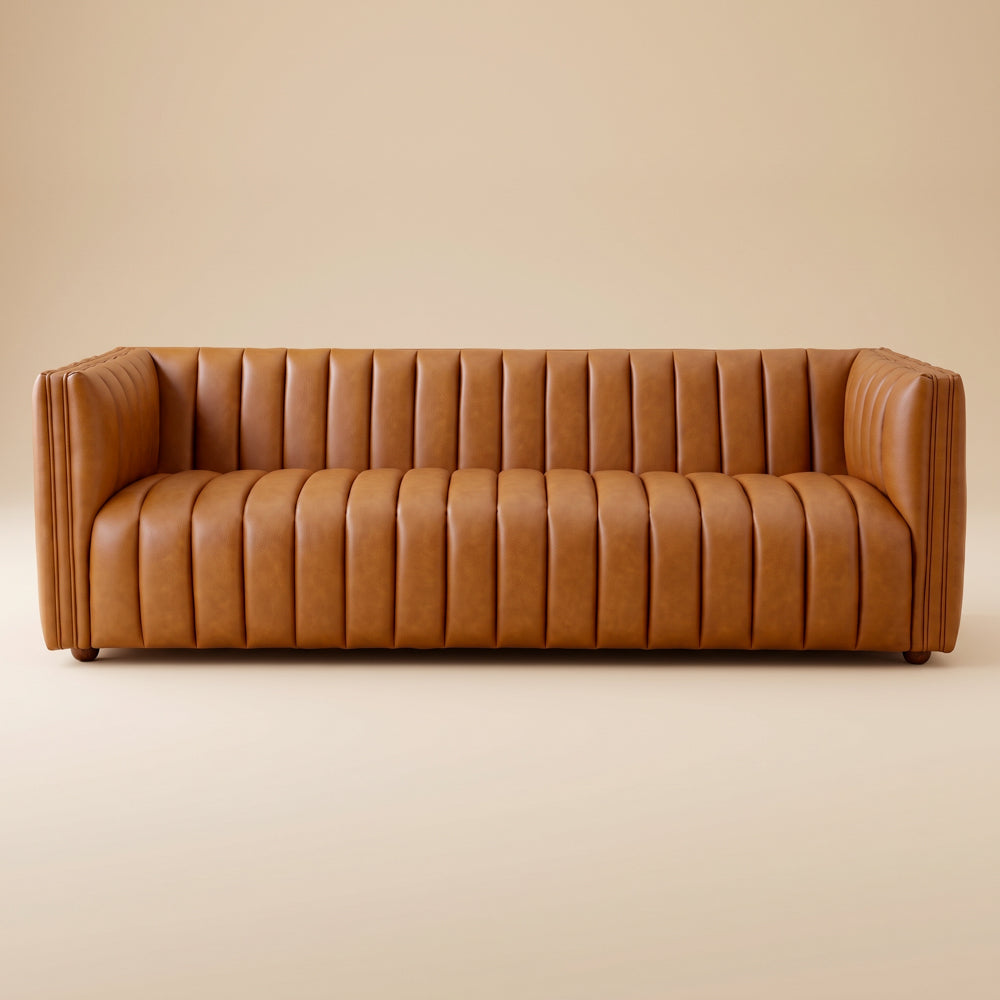
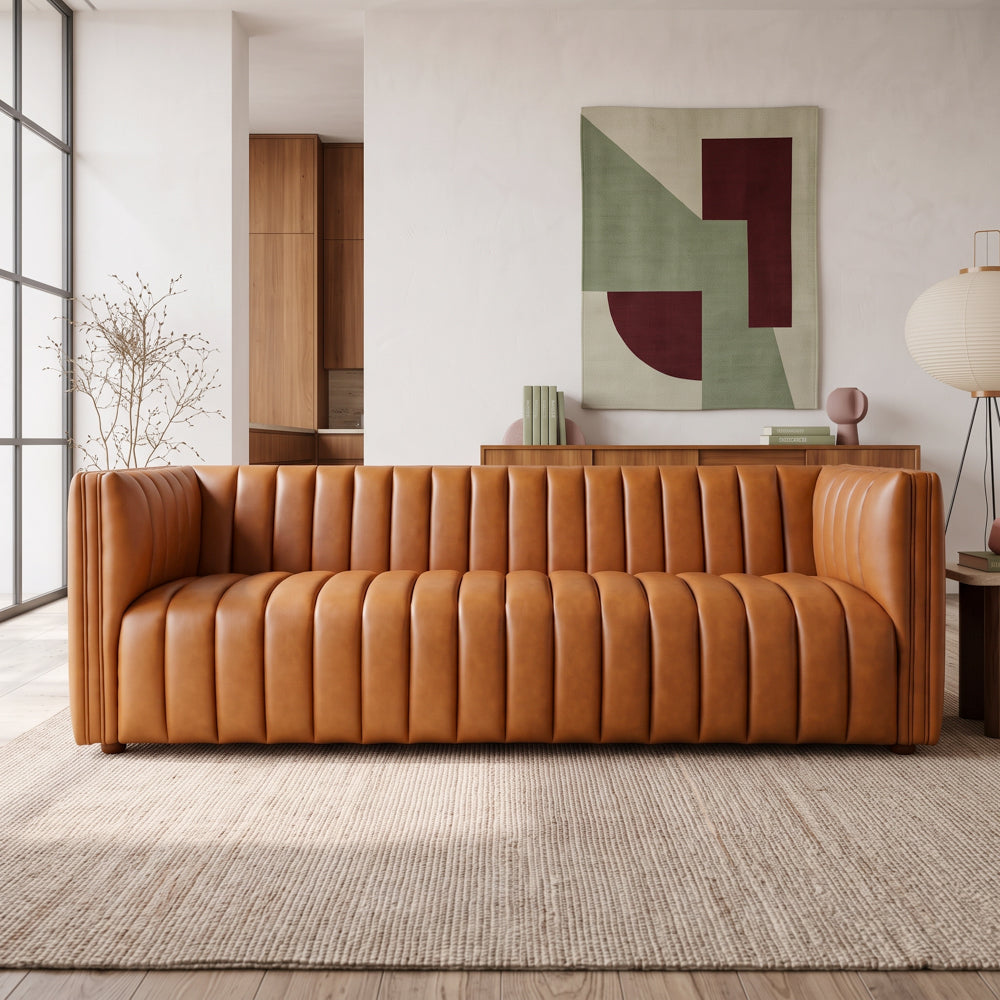
The Brooklyn Cognac Leather Sofa shows how these principles come together. Its frame is made of FSC®-certified wood with corner-block-reinforced joints — the kind of construction that resists twisting and creaking over years of daily use.
The cushions are CertiPUR-US® certified, so there is no chemical off-gassing to worry about, and the upholstery is premium top-grain genuine leather that ages beautifully instead of peeling or cracking like synthetic alternatives. It holds up to 750 lbs and carries TSCA and CAL TB 117 certifications.
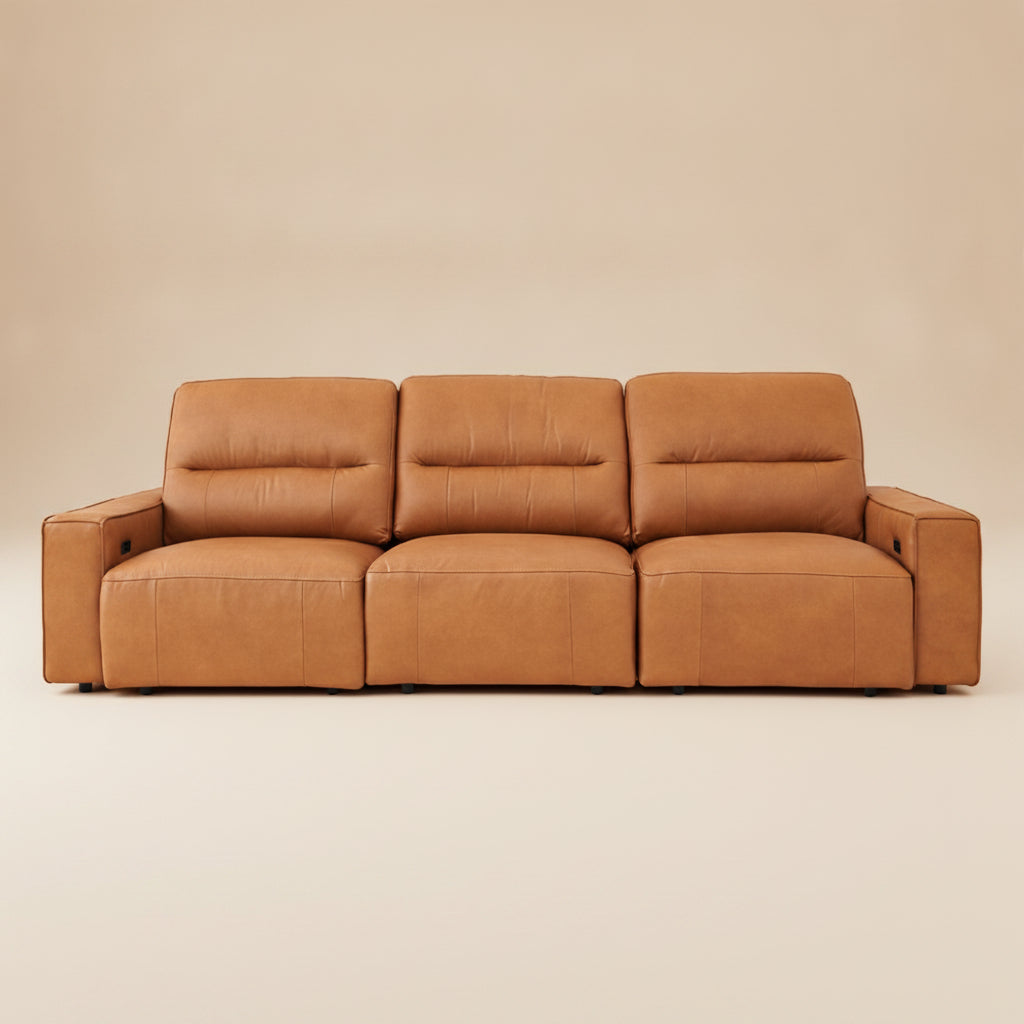
If you want a softer, warmer feel, the Georgia Tan Leather Sofa checks the same boxes with feather-filled cushions and a wider frame. The pine frame is FSC®-certified, the cushions pair CertiPUR-US® foam with feather fill, and the leather is top-grain. The seat and back cushions are both removable and reversible, which extends the life of the sofa even further. It arrives with no assembly required, so there is no leftover hardware packaging to throw away.
Dining Room: Solid Wood Tables and Natural Seating
The dining room is where material choices show most clearly. A solid wood table from a responsibly managed forest is sustainable furniture done right. Wood is renewable, and a well-made wood table only grows more beautiful over time.
The Astor Round Walnut Dining Table is made from sustainably sourced, solid kiln-dried walnut — not veneer, not engineered wood, not particleboard. Kiln drying removes moisture from the wood before it is shaped, which prevents the warping, cracking, and mold that cause most wood tables to fail early.
The thick top has clean reverse-bevel edges, and the pedestal base frees up legroom. It comfortably seats four to six and suits smaller spaces, since the round shape removes wasted corner area. Walnut is dense and scratch-resistant, and it develops a rich patina with age — most owners find the table looks better at year ten than on the day it arrived.
For seating, the Olivia Windsor Counter Stool (Set of 2) is built from rubberwood, one of the most eco-friendly timbers on the market. Rubberwood comes from rubber trees that have finished their latex-producing life; instead of being burned or left to rot, the wood is harvested for furniture.
That prevents waste and reduces pressure on old-growth forests. The untreated natural frames retain their original grain texture, emit no harmful emissions, and pair well with soft beige spot-clean cushions. Sold as a matched pair, they finish a kitchen island or home bar without any extra purchases.
Bedroom: Solid Wood Storage Built to Last
The bedroom dresser is one of the most overlooked sustainable choices in the home — and one of the longest-lasting categories of furniture when made well. A good, solid wood dresser can be passed down for generations.
The Stanley 6-Drawer Dresser is built from solid wood with a warm walnut finish — not printed laminate, not MDF with a paper foil wrap. That distinction matters, because solid wood can be sanded and refinished if it gets scratched or worn. Its surface life is not fixed the way laminate furniture's is.
Six drawers offer generous storage, so there is no need to buy extra pieces to fill the room, and the clean mid-century lines will not look dated in five years. Reviewers consistently praise the quality of the wood and the accuracy of the finish — rich and real, not synthetic.
Lighting: Natural-Material Table Lamps
Sustainable home furnishing does not stop at sofas and tables. Lighting made from natural materials supports the same philosophy and ties a room together visually.
The Vesta Table Lamp (Natural / Black) has a rubberwood base, a metal structure, and a cylindrical fabric shade. Rubberwood is the same plantation timber used in the Olivia stools — a low-impact material with a warm, natural grain that pairs effortlessly with walnut furniture. The lamp works with standard bulbs, so switching to LED is simple and needs no adapter.
At $59.99, it is affordable without being throwaway — exactly where a sustainable accent piece should sit.
Is Sustainable Furniture More Expensive?
There is a common myth that sustainable furniture always costs more. The honest answer is that a well-made piece often costs a little more on the day of purchase. But it costs less per year over any realistic time horizon. And it creates one manufacturing event, one shipping journey, and one disposal event — instead of four.
Mid in Mod sells direct to customers from its Houston showroom and warehouse. There is no retail middleman adding margin to the price. That is how certified, responsibly made furniture becomes available at prices that genuinely compare to budget alternatives — without the disposable build quality that makes those alternatives so wasteful.
How to Shop Sustainably at Mid in Mod
A few simple rules make the decision easier:
- Look for FSC®-certified frames. The Brooklyn and Georgia leather sofas both carry this certification.
- Check for CertiPUR-US® foam. This is the most important detail for indoor air quality.
- Choose solid wood over engineered alternatives. The Astor table and Stanley dresser are both solid kiln-dried wood all the way through.
- Pick natural upholstery. Genuine leather and natural fabrics last longer and do not create microplastic pollution.
- Buy something worth keeping. The single most sustainable furniture decision is choosing a piece that never needs replacing.
What does FSC-certified furniture mean?
It means the wood used in the furniture came from a forest that is independently checked for responsible management — one that protects wildlife, water sources, and local communities. FSC® is the most trusted certification for wood sourcing.
Is genuine leather an eco-friendly material?
Genuine leather is a byproduct of the meat industry, so no additional animals are raised to produce it. It is also one of the most durable upholstery options available: a quality leather sofa lasts 15 to 25 years, while most synthetic alternatives last 3 to 8 years and shed microplastics over time. Leather does not.
What is CertiPUR-US® foam?
It is an independent certification for sofa and seat-cushion foam. Certified foam is made without ozone-depleting chemicals, flame retardants, heavy metals, or formaldehyde, and independent labs test it before it can carry the labe
Is rubberwood a sustainable material?
Yes. Rubberwood comes from rubber trees after their latex-producing years are over. The trees are grown on plantations for rubber, not for timber, so using the wood for furniture prevents waste and reduces pressure on old-growth forests.
Why does kiln drying matter for a wood table?
Kiln drying removes moisture from the wood before it is shaped into furniture. Wood with too much moisture can warp, crack, or grow mold over time. Kiln-dried wood is stable and lasts far longer.
Why is mid-century modern design considered sustainable?
It uses solid wood, natural materials, and timeless shapes. Furniture that looks good forever never needs to be replaced because it has gone out of style — and that is the most powerful sustainability quality any piece of furniture can have.



Leave a comment
This site is protected by hCaptcha and the hCaptcha Privacy Policy and Terms of Service apply.